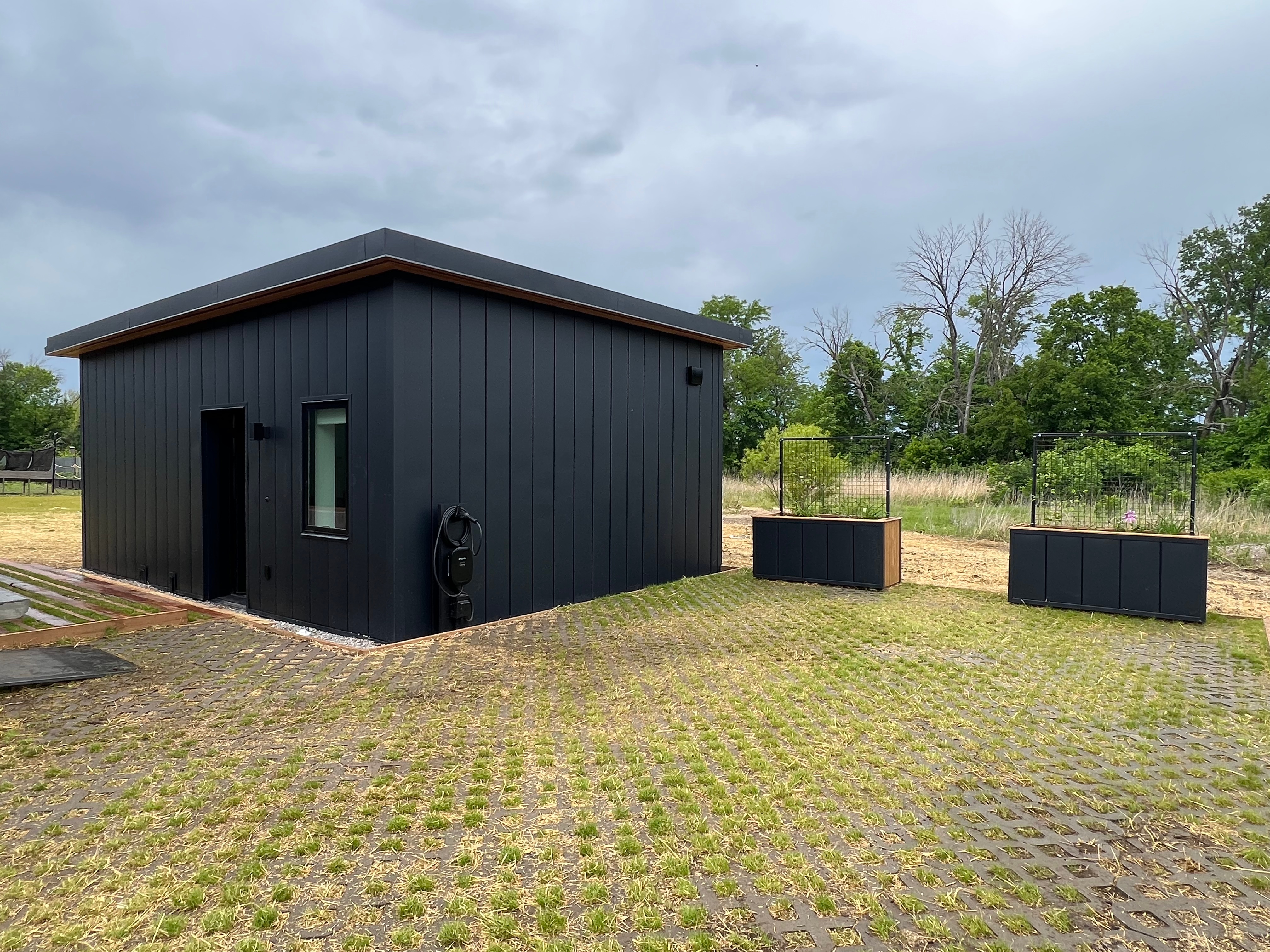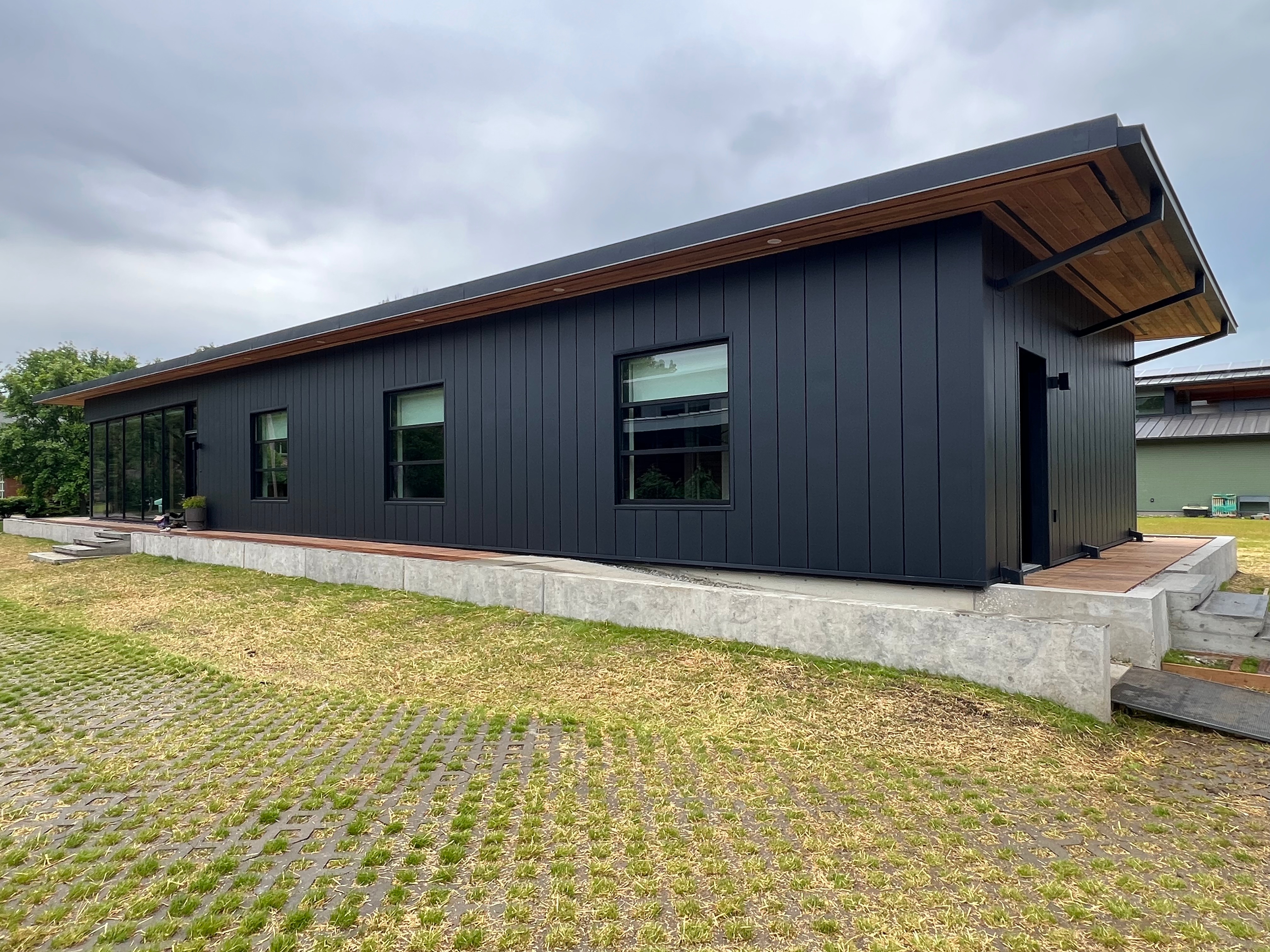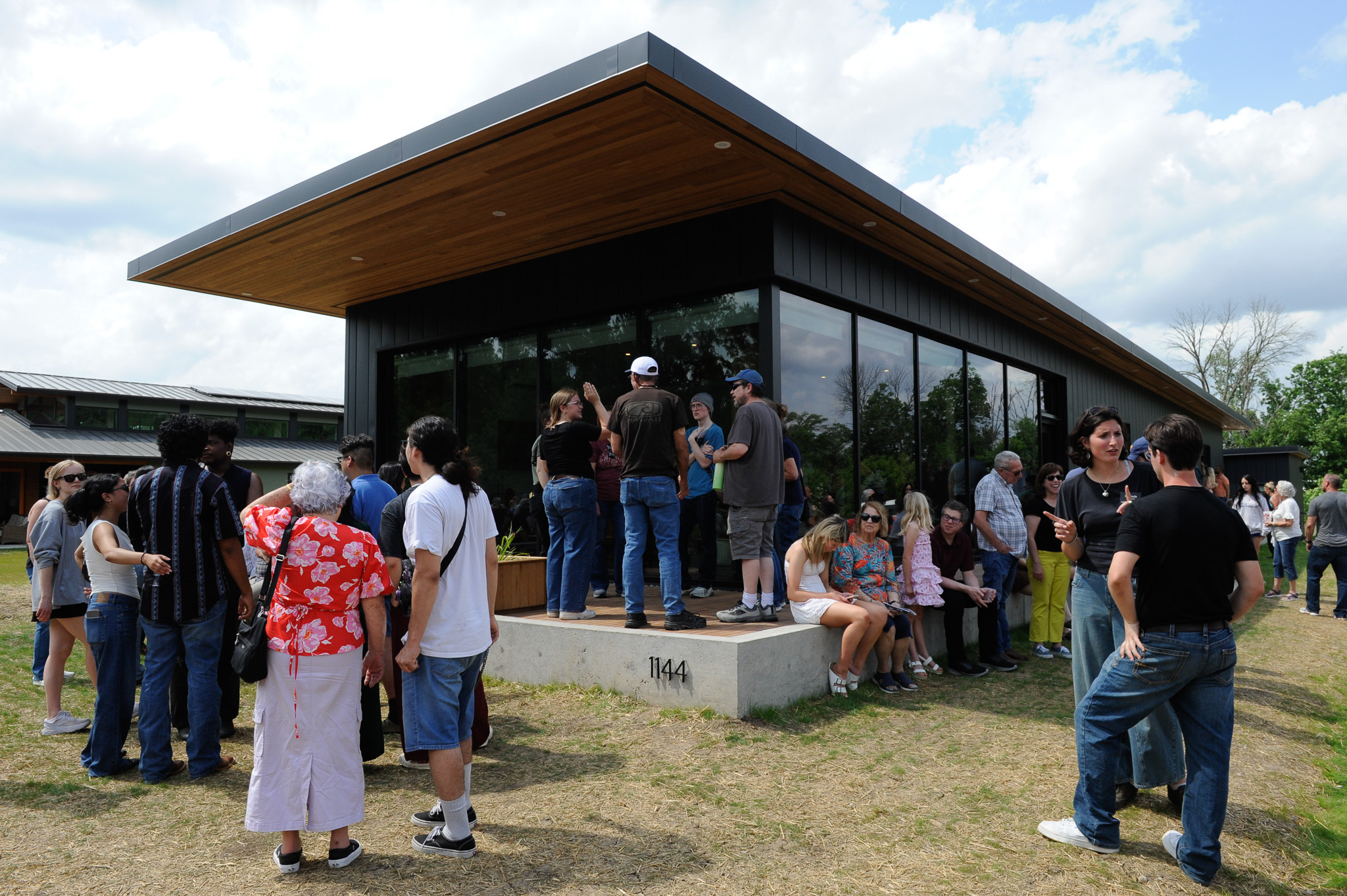
In what’s become an annual rite of spring, every Saturday in the middle of May the Lawrence community lines up to see a shiny new Studio 804 building, oohing and aahing like patrons at a PGA golf tournament. (The Masters tournament comes to mind.) At this year’s outing, the golf metaphor seems apt: following over par efforts the previous two years, the 18 students in KU’s Master of Architecture program have returned to red figures at 1144 East 12th St., producing one of their strongest entries in the 30-building history of 804.
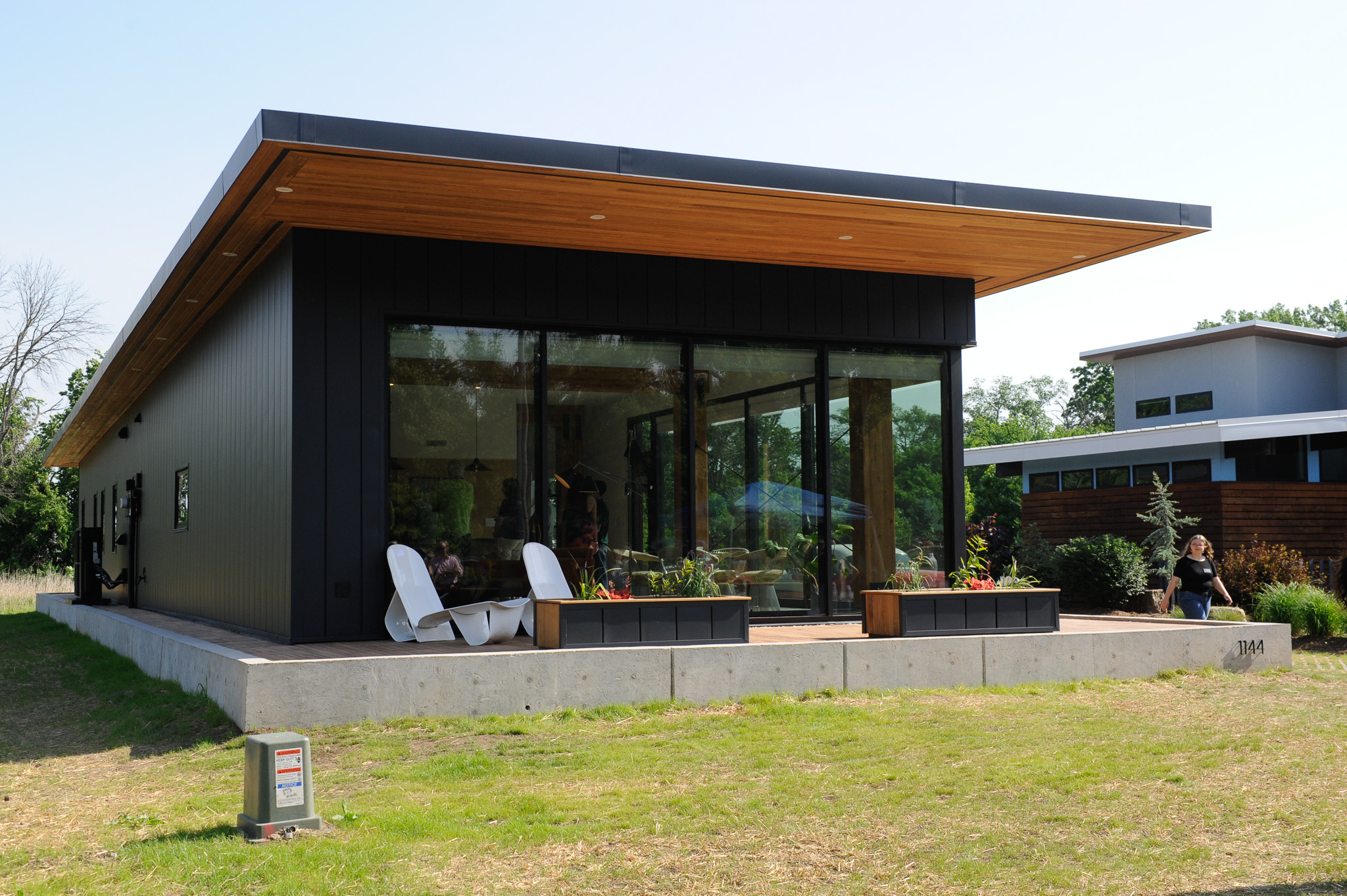
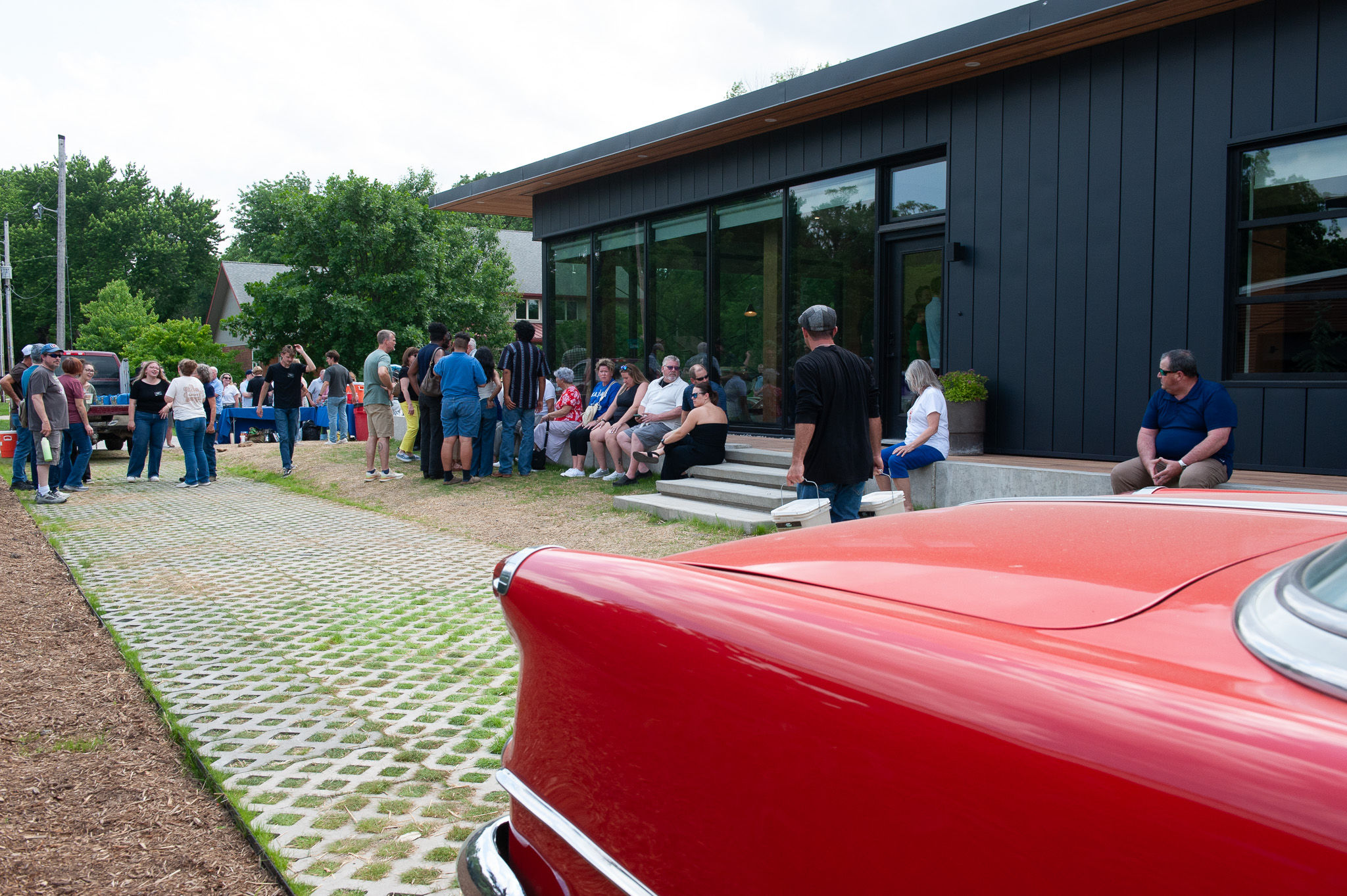
Prof. Dan Rockhill’s students found their game on what might be one of the flattest, hardscrabble sites in town, located in a funky neighborhood where many of the mailboxes are leaning like tired drunks at closing time. Out of this morass has sprung an arresting, statuesque building that looks something like an Apple store leased to a Mies van der Rohe steel and glass shoebox. Love it or hate it, you can’t ignore it.
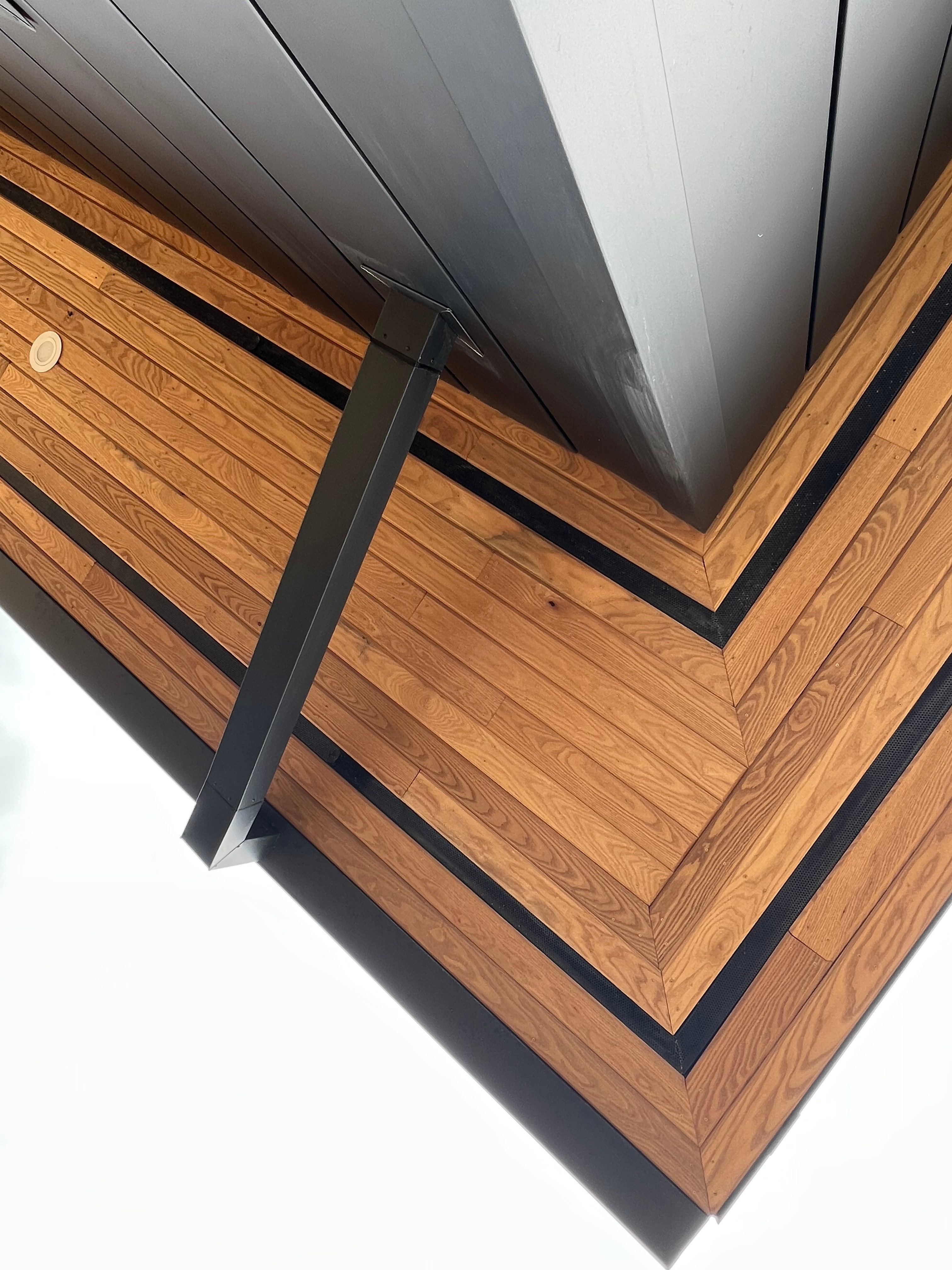
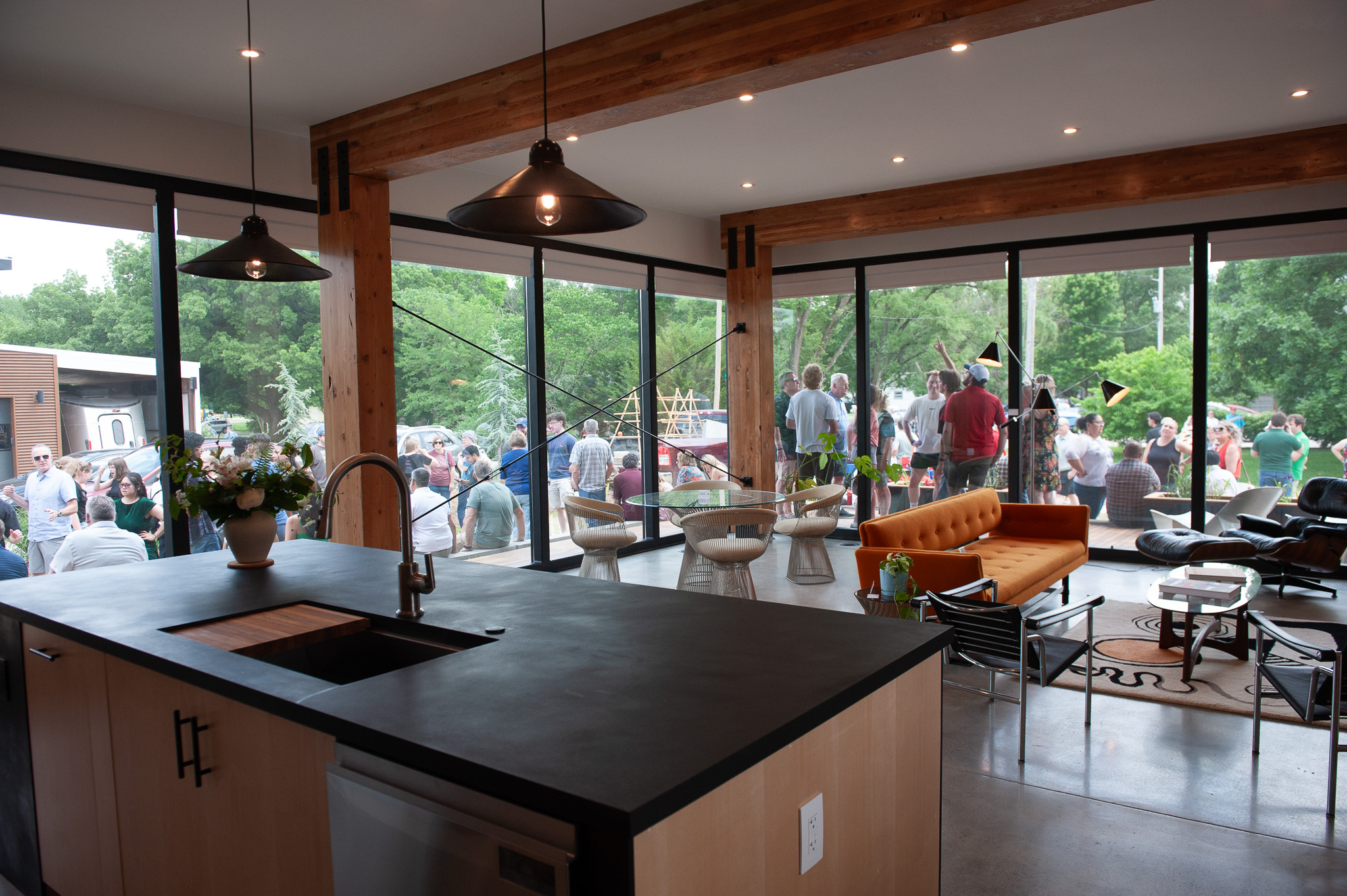
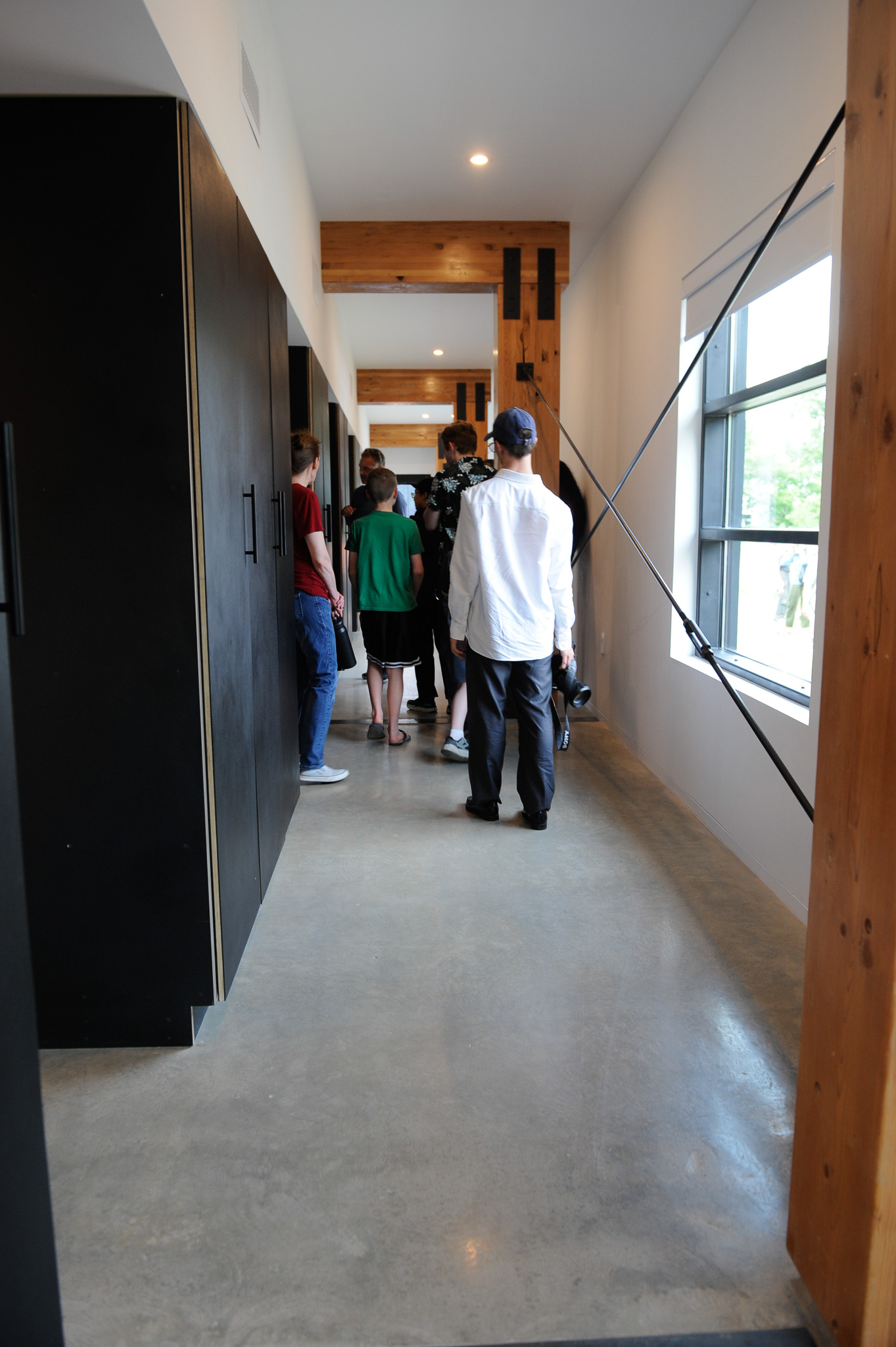
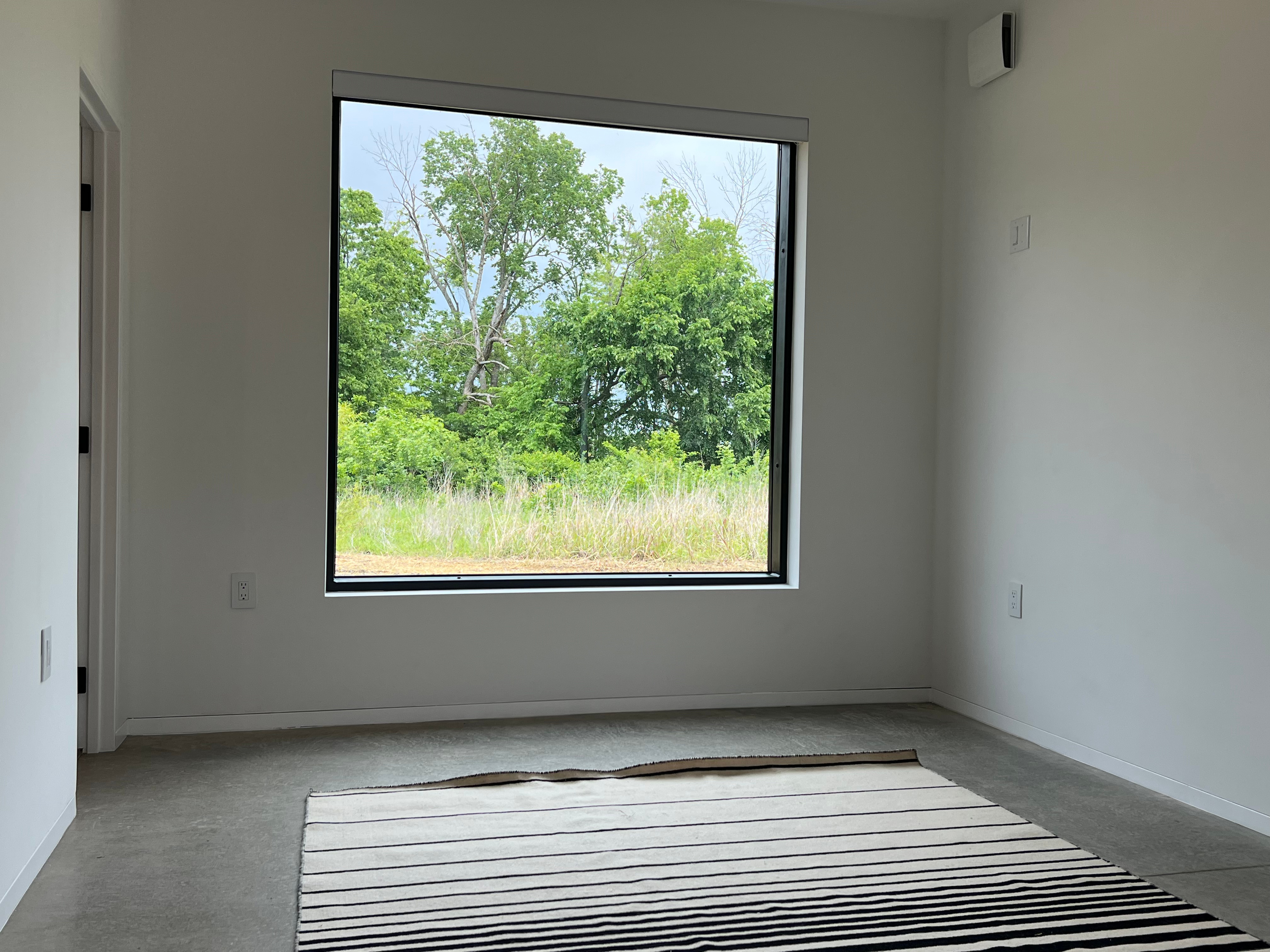
Squatting on a thick concrete plinth, the one-story house’s signature statement is a large overhang that smartly salutes the southern sky, providing ample shade in summer and solar collection in winter. The overhang and building are supported by massive structural beams called glulams, which are fully expressed in every room of the house and can be easily seen from the street through the triple-glazed living room windows. Altogether, the base, roof span, and interior structural expression dynamically uplift what would otherwise be a black slab of architecture.
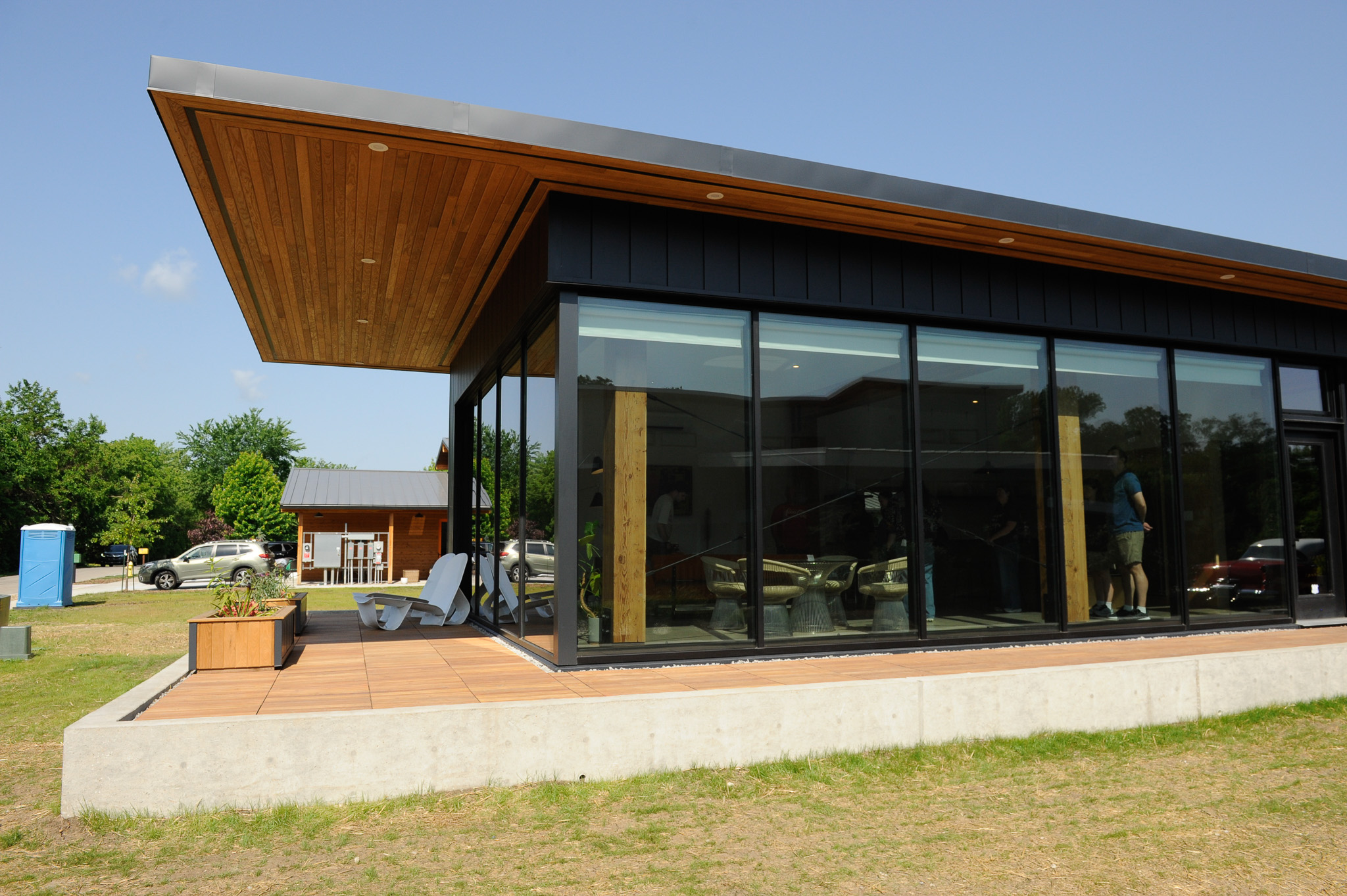
“We didn’t want the building to look like it was just dropped in place, or like it was taking up so much space, or creating so much weight,” said Tristan Taylor, one of the 804 graduate students who led tours of the building at the May 16 open house. “We wanted it to look like it was sitting gracefully on the plinth overlooking the neighborhood.”
According to Taylor, the form was kept simple to make the building easier to construct and allow students to focus on technical elements, which grow more impressive every year. For 2026, Rockhill and his team are pursuing LEED v4.1 Residential certification, the latest and more rigorous version of the U.S. Green Building Council’s benchmark sustainability rating system. The next-level tech is enough to make a NASA engineer blush.
While this is all well and good, the emphasis on technology has in the past tended to colonize the imaginations of many Studio 804 students and led them down a path that has resulted in houses that were less than optimal from a functional standpoint, to put it gently, and more about showing off fancy gadgets and fixtures.
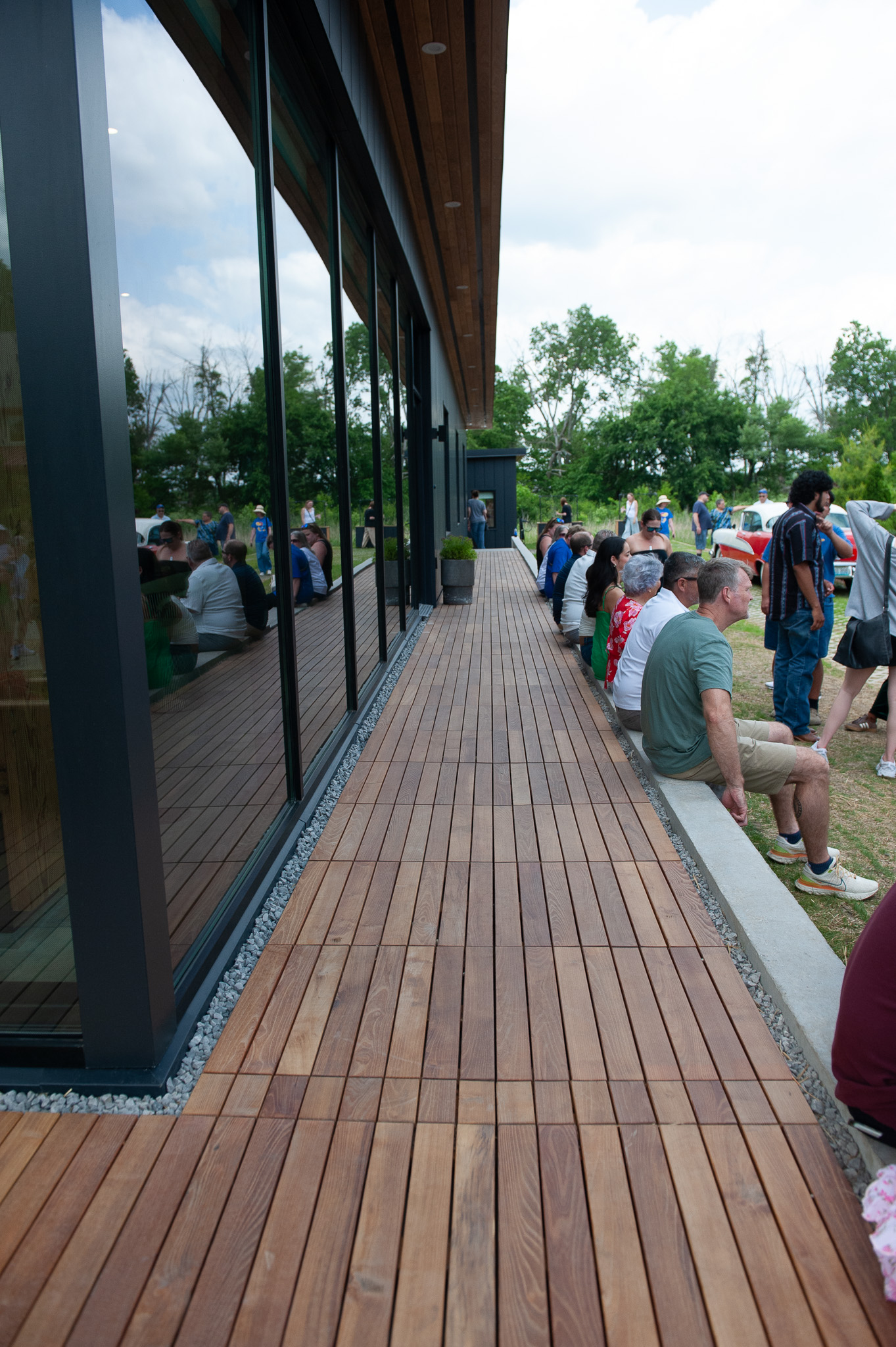
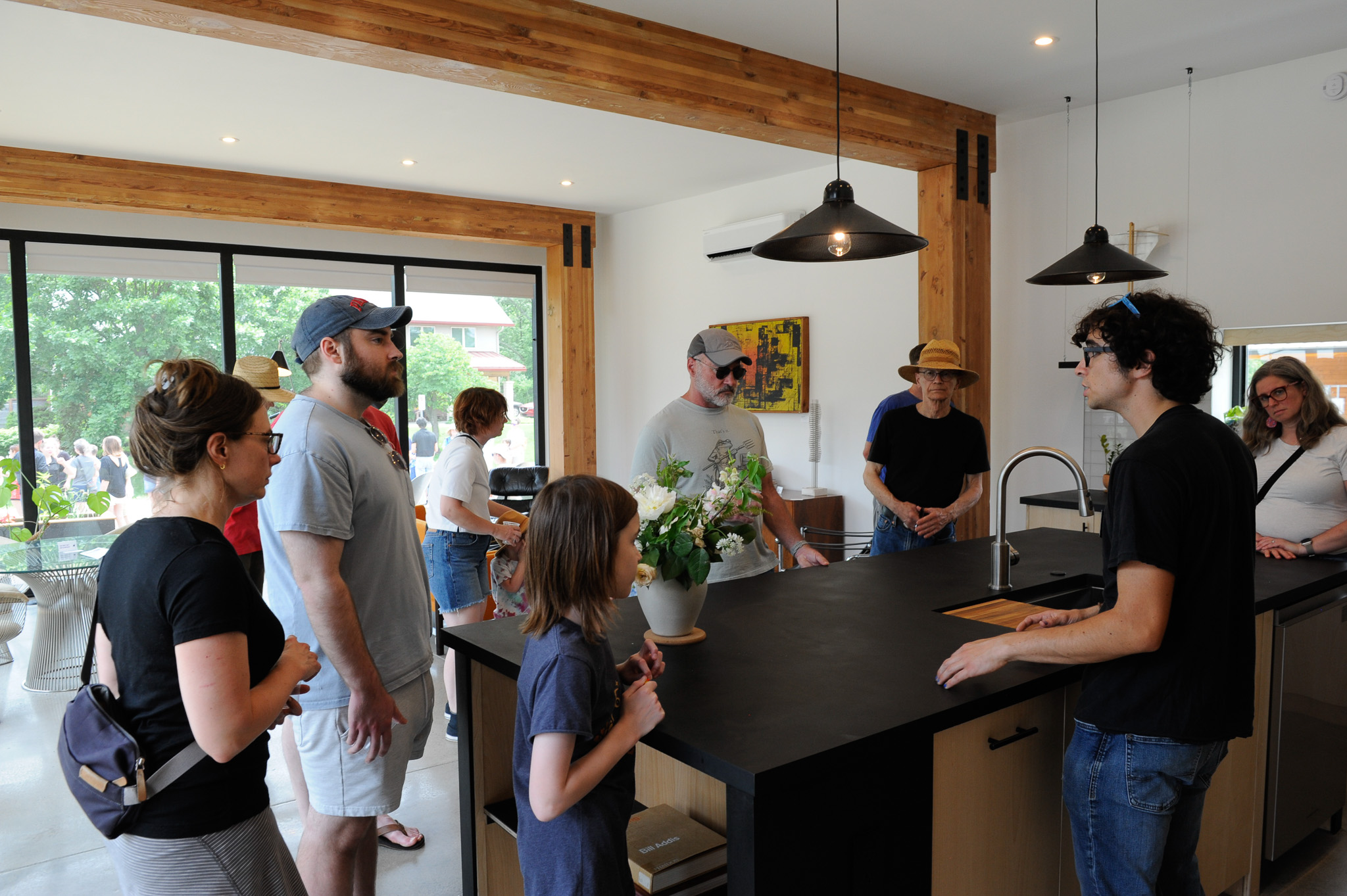
The temptation of tech persists—it’s a big part of the Studio 804 brand—but this year marks a notable shift in emphasis back to the human condition. Everything is on one level, entry and exits are clearly visible and convenient, and accessibility is no longer just an afterthought. For example, students widened doorways and integrated a ramp into the plinth to make it easier for wheelchairs to move about in and around the house. Kitchen cabinets were lowered, ADA compliant faucets were installed, and storage was increased. A 400-sq. ft. Accessory Dwelling Unit was created in the back to use as an extra office, 3rd bedroom, or Airbnb. These kinds of design decisions will, students hope, expand the typical buyer demographic for the home, or in other words, appeal to people who can afford them, which tends to skew older.
“I thought a lot of my grandma when we were designing this house,” said 804 grad Katelyn Fuller, who did a lot of design coordination for 1144 E. 12th St. “She always walked with a walker and had a hard time on stairs, so it was important to me that we integrated those [accessible] things.”
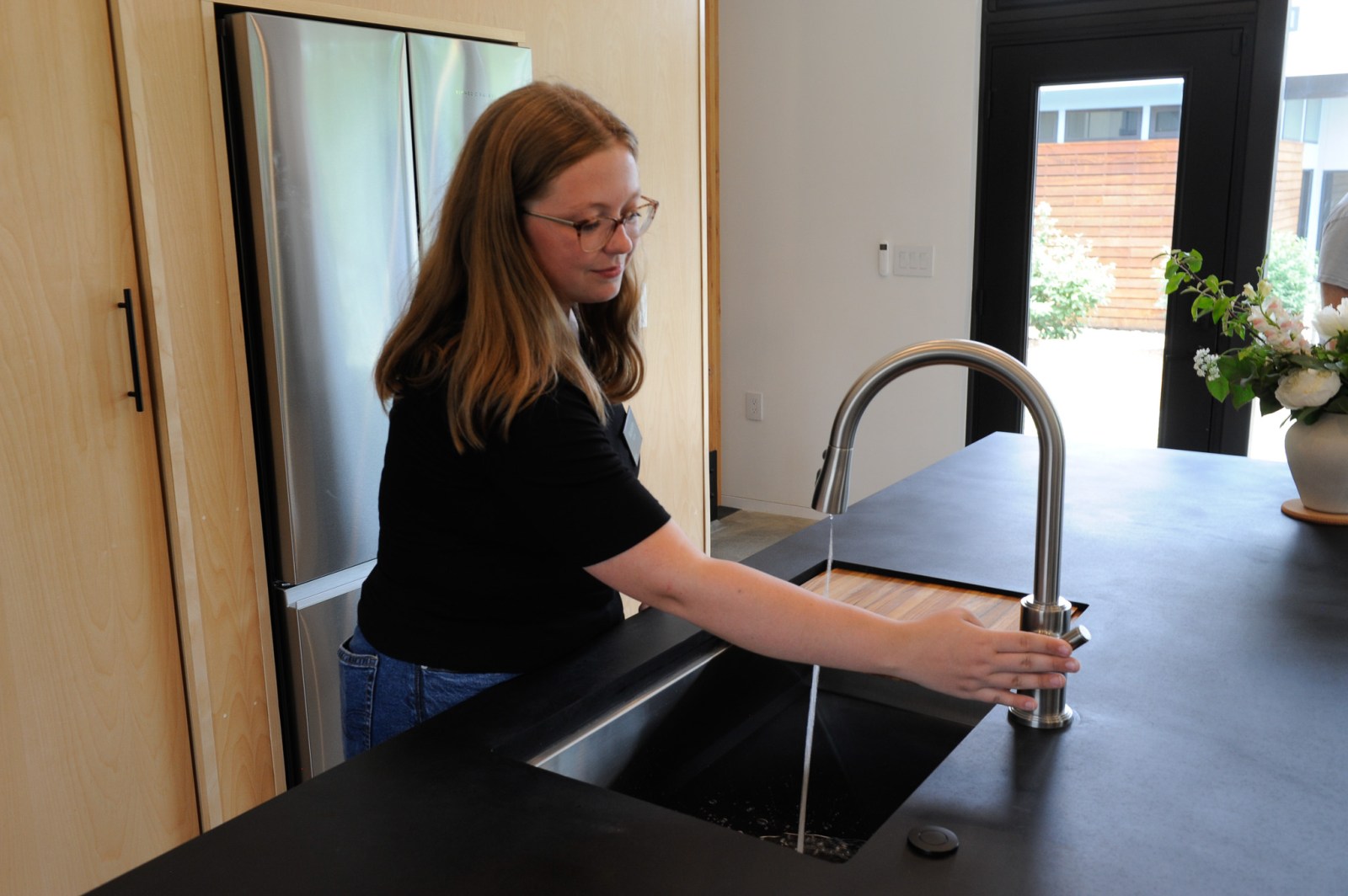
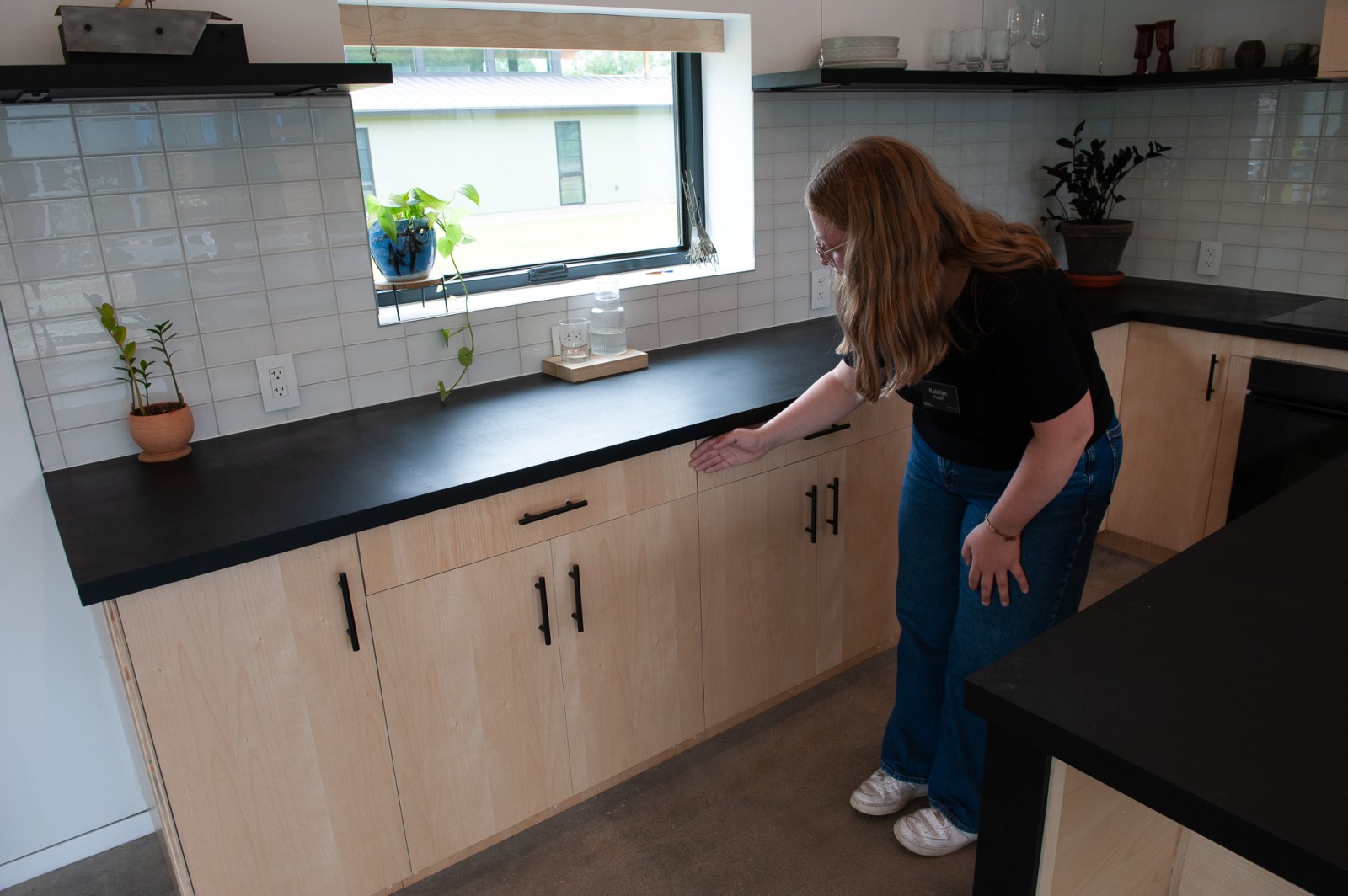
While the architects may have aced the functional program, they swung and missed in several areas that may turn off some potential buyers, who are looking at an asking price of $699,000 for the property. Most glaring is a missing carport and lack of basic landscaping, which as it currently stands renders the house less like a serene modernist retreat and more like the monolith in 2001: A Space Odyssey after it has crash-landed in a vacant lot. Another issue, much further down the hierarchy of problems but nevertheless important, is fit and finish. Though improved compared to some previous 804 houses I’ve toured, it falls short of buyer expectations at this price range.
I asked Fuller about some of these whiffs, thinking that she and her classmates might have overlooked them. Not a chance. Regarding the carport and landscaping, because the property is technically in a floodplain, due to city regulations about half of it had to be water permeable, she said, forcing the team to decide whether to build a garage or an ADU. They chose the latter, which increased complexity and left little time or resources to complete their landscaping plans, Fuller said. Detailing? Students did mock-ups of kitchen cabinets in their warehouse to prepare for a professional install but alas found it exceptionally difficult to adjust their custom fronts with the underlying Ikea hardware on site.
Most flaws in 804 projects are artifacts of limited material choices—the program relies on donations, deep discounts, and the good will of vendors across the country—and the reality that students have never built a house before, let alone one with LEED requirements. By the same token, the fact that the design-build program continues to produce some of the most progressive architecture in the Midwest, if not the whole country, the burden of expectations to create standout architecture year after year keeps mounting.
Thankfully, this steam pressure has, it appears, renewed focus on functional integrity in design, not just what’s sexy or hot. Thinking I was architecturally astute by asking why the 804 team didn’t extend the lovely structural beams through the exterior—the quintessential midcentury modern expressive look—Fuller quickly put me in my place.
“If the gluelam was set into the wall, their foundation footings could crack if one side settles faster than the other,” she said.
Just when you think you’ve cynically outsmarted these students, they’ve got an answer that makes you go “aah.”
—Bill