In Memoriam: Stephen H. Grabow

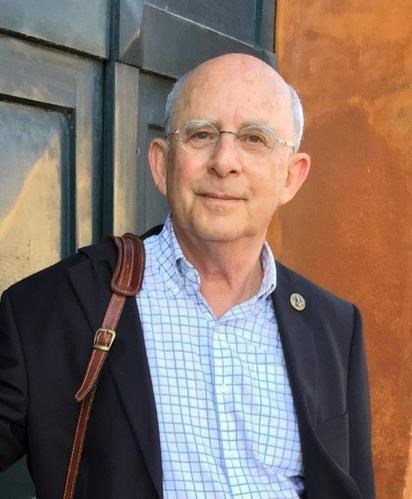
Prof. Emeritus Stephen Grabow at his home in Lawrence, Kans. in May, 2022
Prof. Emeritus Steve Grabow at his Lawrence home in May, 2022. Photo: Tom Harper

If George Beal, Curtis Besinger, and Eugene George were the fathers of KU’s modern architecture program, then Professor Emeritus Stephen Grabow, who died last week in Bloomington, Minn. at age 81, was its passionate, steadfast defender.

Separated by one or two degrees from Frank Lloyd Wright and Walter Gropius, who strongly influenced the development of the architecture department’s modern curriculum, Grabow was hired by and taught alongside Besinger, a key figure in Wright’s Taliesin school.

From 1973 until his retirement in 2017, Grabow played a leading role in elevating the prestige of the KU School of Architecture, especially through his creation of study abroad programs and recruitment of faculty talent. His imprint on students, many of whom are now shaping our built environment, is incalculable.

In 2015, our paths crossed when I took his monumental Principles of Modern Architecture lecture. Though I wasn’t an architecture student—I took the class because of my involvement with Lawrence Modern and interest in modern architecture—I remember going into Marvin Hall Forum, the Studio 804 addition where the lecture was held, thinking I knew something about the subject. I was wrong. I had barely scratched the surface. Week after week, I walked out of class feeling like Dorothy in The Wizard of Oz when she went from black and white to Technicolor. The outside world seemed utterly transformed. Aside from a sociology class I took in my freshman year of college, no other academic course I’ve taken has had as big an impact.

Prof. Grabow was a superb lecturer. I can still see him wandering around the room, leaning against the louvered glass walls, his arms folded, his fingers rubbing his chin in thought as he brilliantly deconstructed hundreds of buildings and artworks in his slide decks, adding insightful context drawn from his immense knowledge of liberal arts and worldly cultures. Through his intellectual curiosity and layered storytelling, modern architecture came across as a far more complex activity than I had previously imagined, much more difficult and profound than any of the individual arts like sculpture or painting, for example.

Grabow lectured that modern architecture isn’t a style, it’s a paradigm. Its original intent was to serve humanity upended by the horrors of industrialization. To that end, buildings shouldn’t just shelter you, they need to contribute to your well-being. He showed us what he considered some of the great modern buildings that took that social and functional imperative seriously, such as Frank Lloyd Wright’s Larkin office building, the Berlin Philharmonic concert hall, Louis Kahn’s Trenton Bath House, the Halen Estate housing complex by Atelier 5 architects, among many other examples.

Through his lectures, we learned that when guided by modern architectural principles an office building can be as worthy a space as a church, and that a bathhouse or playground can be as significant a work of architecture as a museum or library. We also learned that the most profound buildings in architectural history have a deep functional concept behind them. They’re not just disposable scenery.

Indeed, Prof. Grabow believed that for architects, functional design was the most challenging and interesting part of architectural design—it’s where the creativity comes from, he said—and the hardest to master. Transcending the “program” and turning it into something more meaningful—making it poetic—is what makes architecture an art. Accordingly, he hated avant-garde architecture, not only because its proponents—architects like Frank Gehry and firms like Coop Himmelblau—trash functionalism and the early modernists but also out of his frustration that the avant-garde so easily seduces young students of architecture.

“It’s like drugs,” I remember him saying.

To guard young minds from falling into that tempting trap, he expected students—most of them freshmen and sophomores—to show up and pay attention. Remarking on a previous mid-semester lecture with many absentees, he reminded students attending how fortunate they were to be in a school that turns away six students for every one they accept. He told them bluntly, “You’re taking up someone’s space if you’re not serious about this material.”
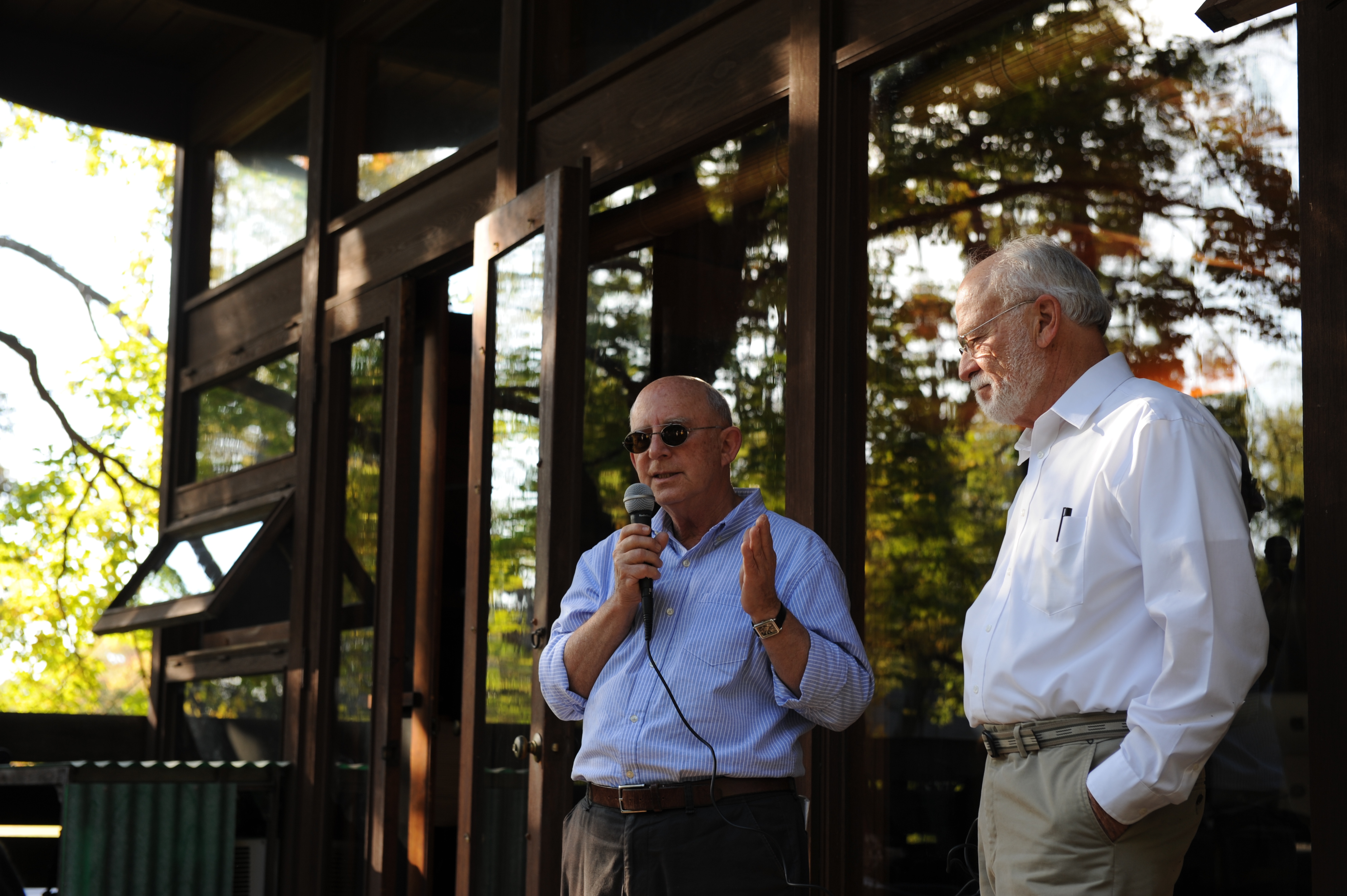
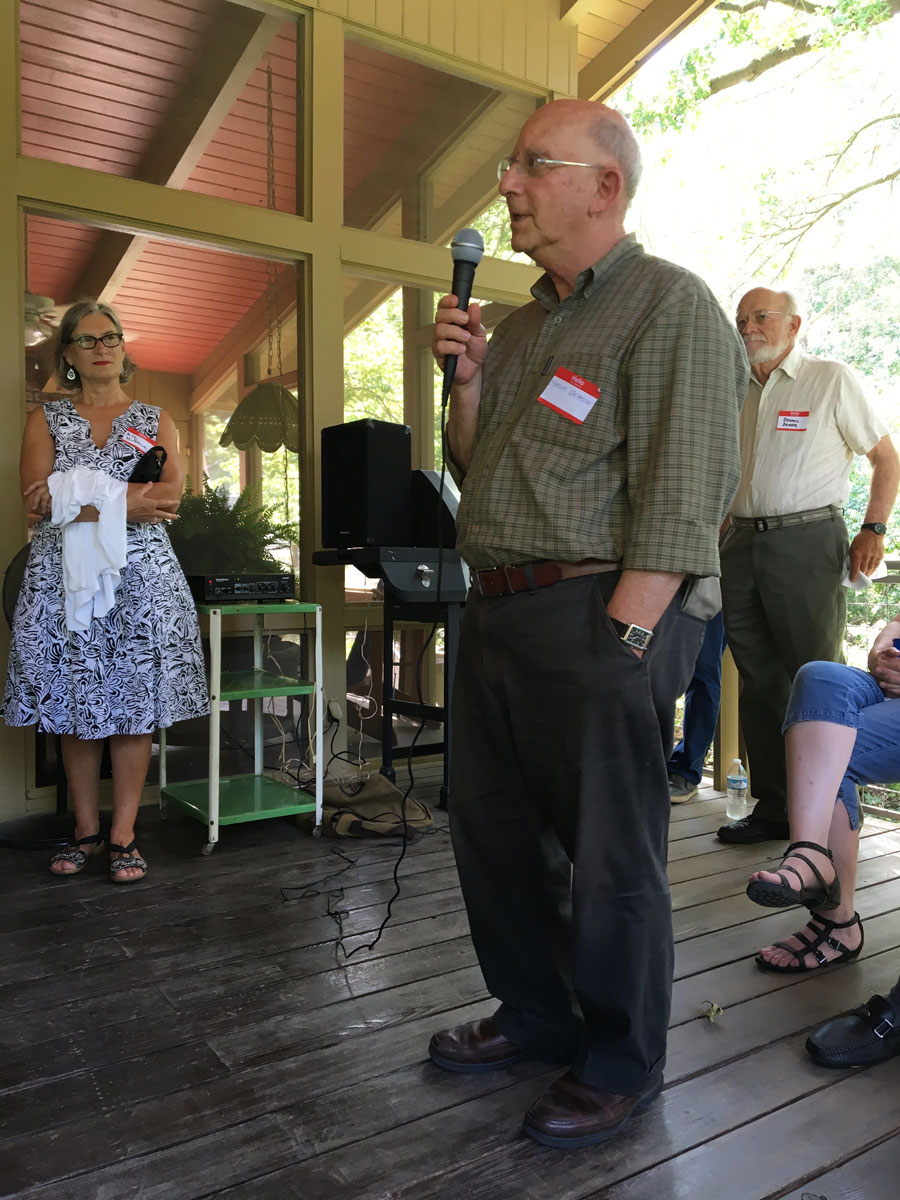
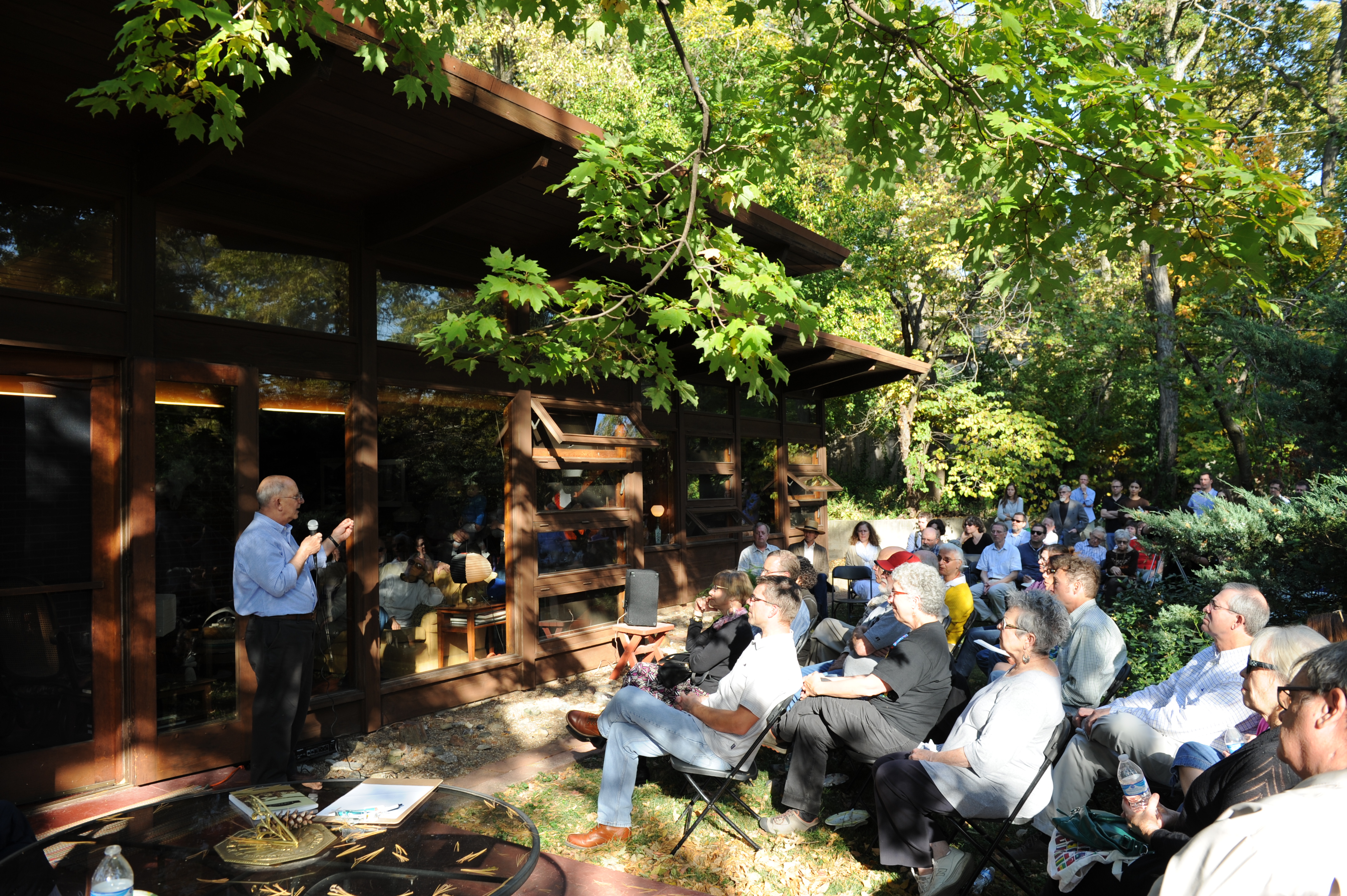
Prof. Emeriti Steve Grabow and Dennis Domer at the Lawrence Modern Beal House event, Oct. 2015.
Grabow and Prof. Dennis Domer (ret.) at Lawrence Modern’s Beal House gathering, Oct. 2015. Photo: Lisa Purdon

At my comfortable remove from the stakes of the profession—I was 50 when I took the class—I found Grabow’s strict, business-like manner refreshing and his self-effacing cynicism endearing. In hindsight, they were premonitions of his early retirement.

One giveaway was his last lecture, where he unexpectedly veered off on a rant against commercial advertising, which he argued has infiltrated architectural design by emphasizing visual appeal over function. This has led to a false form of creativity, he said, and an excuse for students not to do highly disciplined architecture, which is much more difficult. He might have given the same talk year after year; but this one was personal, like a coach hinting that he’s ready to leave the field.  

Soon after the class was finished, I moved to Los Angeles for work and didn’t see Steve again until 2022, when my wife and I dropped by his house to pick up some Danish modern furniture he was selling. (Steve was in the process of relocating to Minnesota to live near his daughter.) He told me that he was ready to leave Lawrence. He felt the town had changed a lot, most of the people he was close to had either left or died, and he was, as he said, “probably my oldest friend, which is a strange thing to happen to you.”

Despite being stressed about moving and coming out of several recent surgeries, Steve couldn’t have been kinder and more generous with his time. He gave us a full tour of his townhome, which looked like something architect Paul Rudolph would have loved, with huge wall mirrors, all-black rooms, artworks illuminated by individual track lights, and extensive shelving of vinyl LPs and CDs. We talked for a while about classical music, what he was doing to unload his massive record collection, Lawrence Modern, the latest Studio 804 project, and golf.

To my surprise, I learned that Steve was a low handicapper and the captain of his golf team in high school, as was I. (And like me, he watched golf on TV all the time and didn’t find it boring.) His wife was from Scotland, and while he taught arts education at the University of Dundee for a year, he got to play many of the great courses at the home of golf. He told me one time while he was playing Carnoustie outside of Edinburgh it was so windy that when he hit a wedge to the green the ball landed behind him. His telling of the story was humorously Grabow-esque, in that inimitable New York street-smarts mixed with book-smarts voice of his, as anyone who knew Steve would remember. I sensed it might be the last time I would see him, so just before I got up to leave, I took a photo of him on his sofa. I’m glad I did, because I will cherish the memory of Steve Grabow for as long as I live.

—Bill Steele
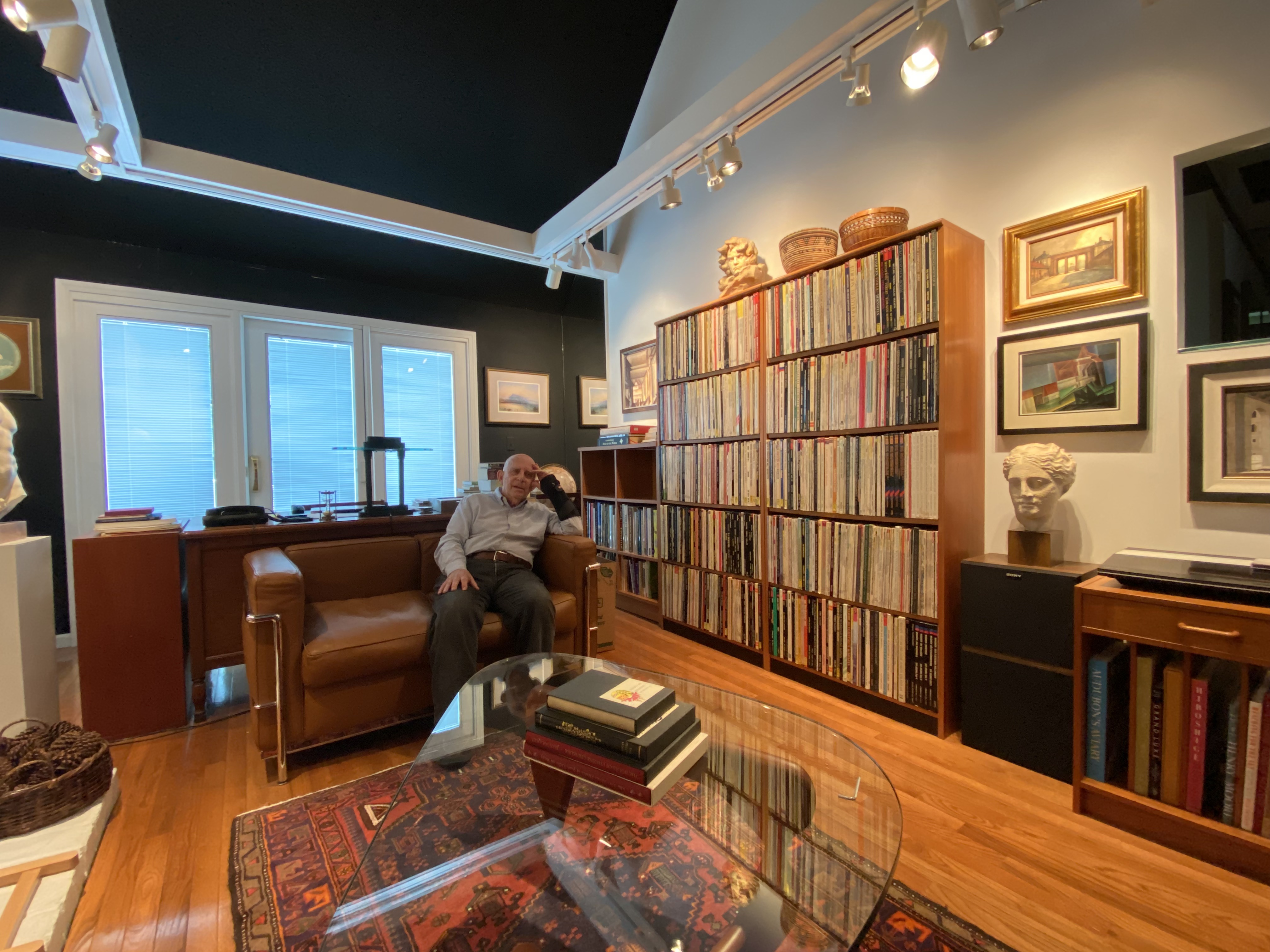
Grabow at his home in Lawrence, May 2022. Photo: Bill Steele

Stephen Grabow obituary. A memorial service will be held at Milton’s Cafe in downtown Lawrence on April 12 from 3-5 p.m.
Prof. Grabow’s talk at the Beal House gathering in 2015 on YouTube. Many thanks to Lisa Purdon!
‘Modernism in Film’ runs on Dec. 6

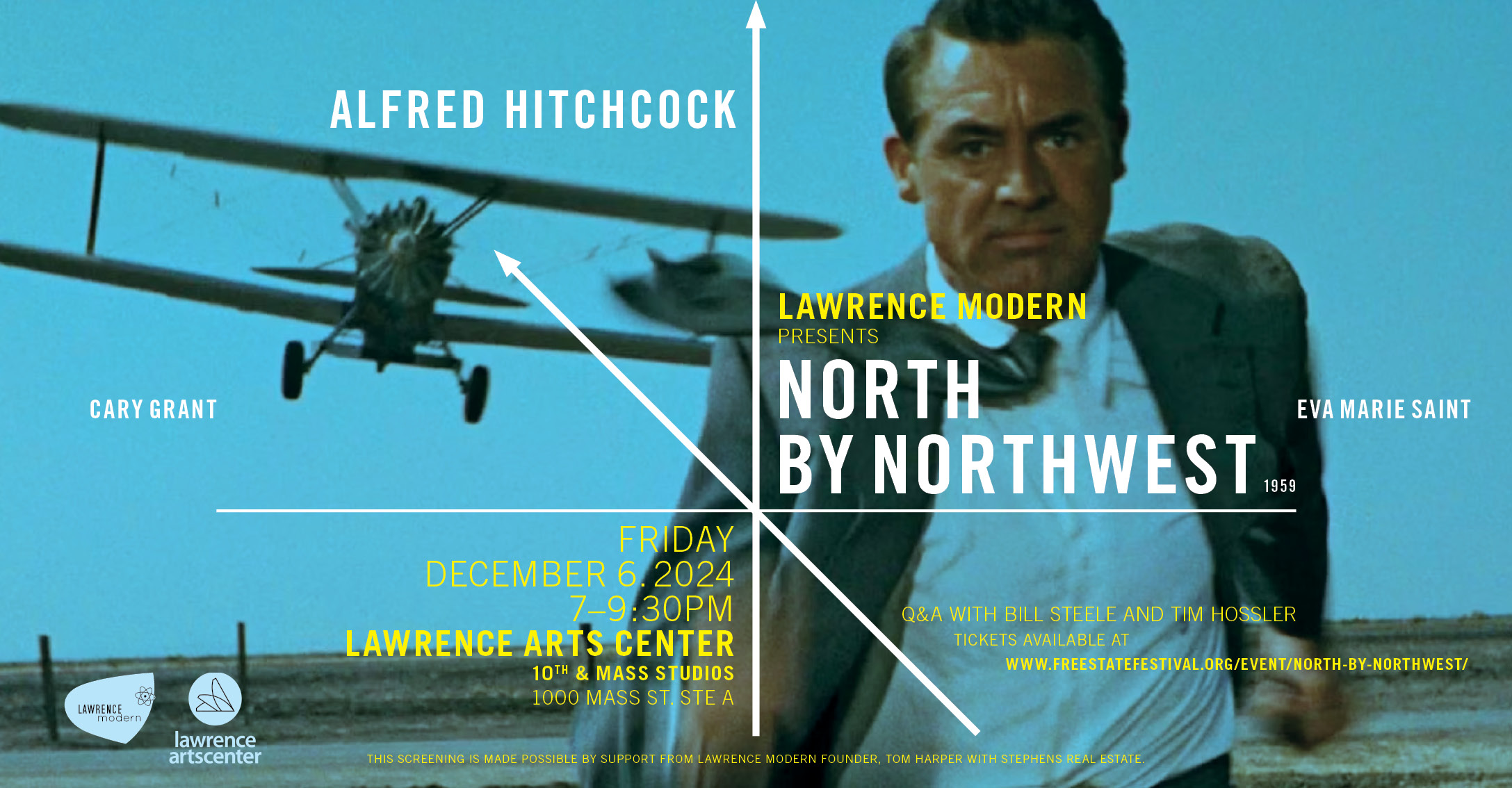
North by Northwest - Lawrence Modern event poster
Tim Hossler

Alfred Hitchcock’s playful light comedy North by Northwest, next up in our Modernism in Film series queue, is the perfect tonic to soothe our post-election anxieties. A film set in 1950s paranoia, it stars an urbane and witty Cary Grant as advertising executive Roger Thornhill, who gets mistaken for a spy and is on the run from a sinister organization run by suave villain Phillip Vandamm (James Mason), who owns an ultramodern retreat atop Mt. Rushmore. It is one of Hitchcock’s most entertaining movies, cooly sophisticated and suspenseful yet romantic and warm. It’s also a gleaming 50s Cadillac of filmmaking craft, well-appointed in graphic design (Saul Bass), cinematography (Robert Burks), and production design (Robert Boyle). All captured in the luscious widescreen beauty of VistaVision Technicolor, where everyone and just about everything looks clean, modern, beautiful, and luxurious. A dusty cornfield has never looked so good.

And it only gets better with age. Over the summer, Martin Scorcese’s Film Foundation and Warner Bros. released a restored print of North by Northwest in glorious 70mm that, for the first time, fully exploits the high resolution of the VistaVision format. While we can’t screen 70mm at the Lawrence Arts Center’s Microcinema, we hope to have the next best thing: a soon-to-be-released 4K Ultra HD Blu-ray that will reveal every speck of dandruff in Cary Grant’s expertly coiffed hair and pressed suits.

Our special guest will be Lawrence Modern’s Tim Hossler, associate professor and chairperson of KU’s design department. (As some may know, Tim is our in-house graphics designer who creates our event flyers.) As the former in-house art director for photographer Annie Leibovitz, Tim is as enthralled as any movie lover of North by Northwest’s iconic images and modernist design sensibility, which he will converse over with fellow Lawrence Modern cinephile and moderator Bill Steele.

Tickets can be purchased here or at the door for $10. The program will start promptly @7PM. Runtime is 2 hrs. 16 min. Get tickets now—the last show we did at the Microcinema, Vertigo, sold out!

Many thanks to the Lawrence Arts Center for their continued support of the Lawrence Modern film series.

North by Northwest 4K HD trailer | Criterion Collection review | LAC tickets | Tim Hossler bio

‘Big G’ house gets big thumbs up

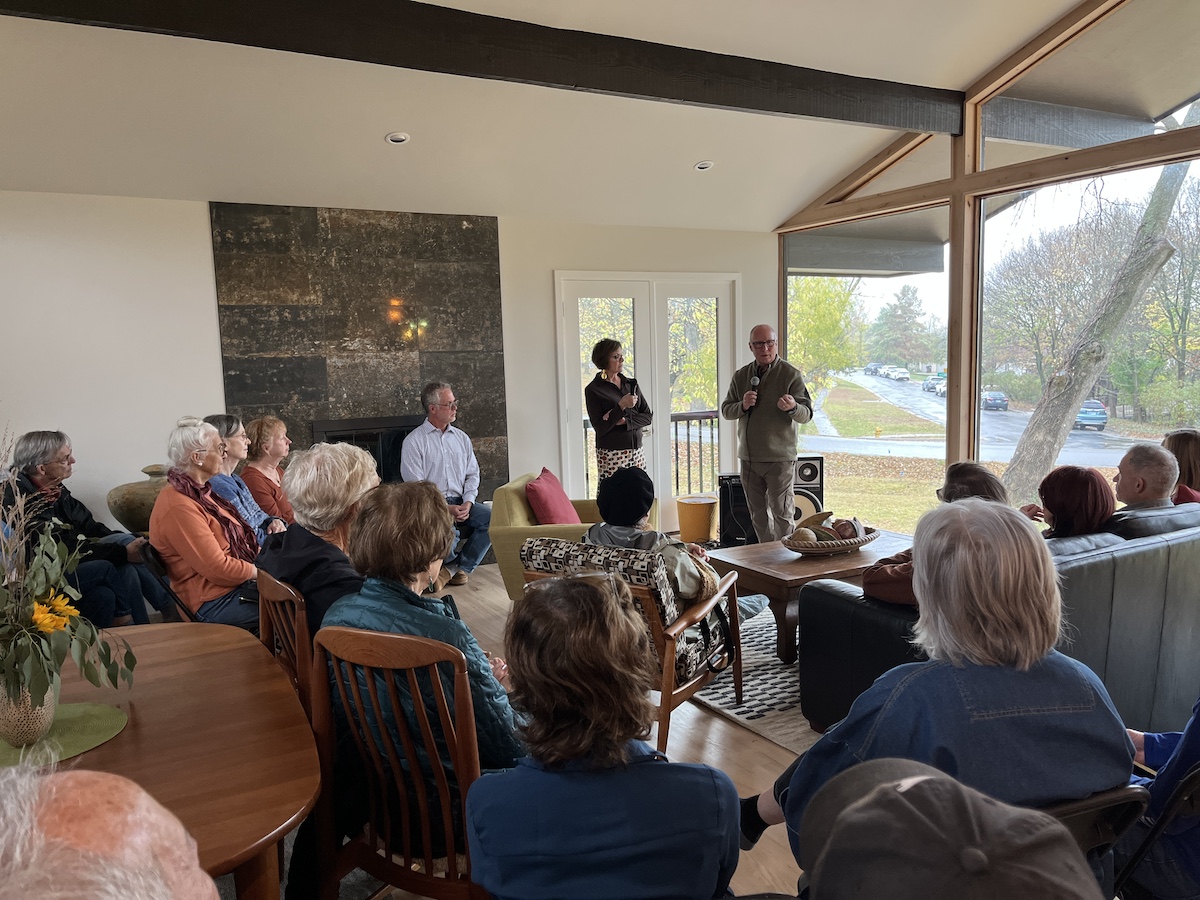
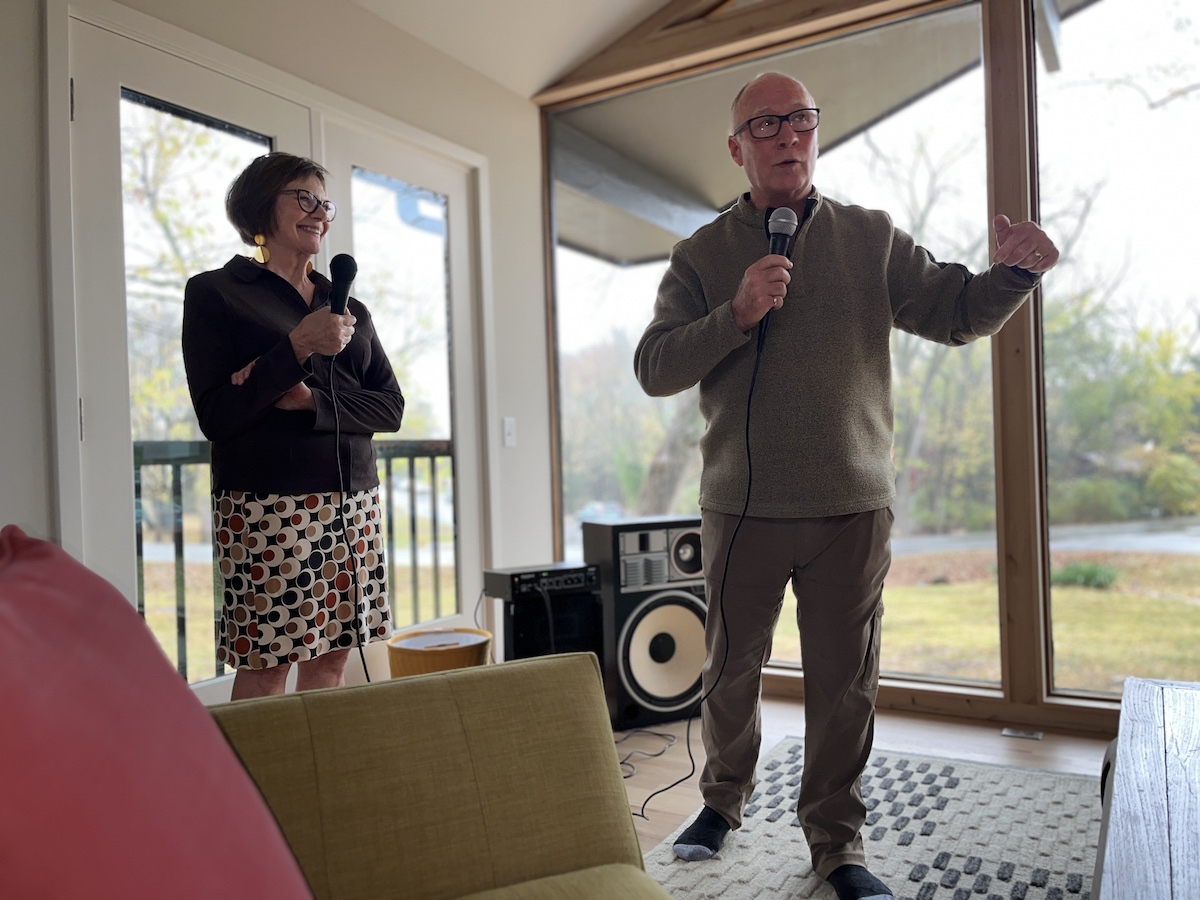
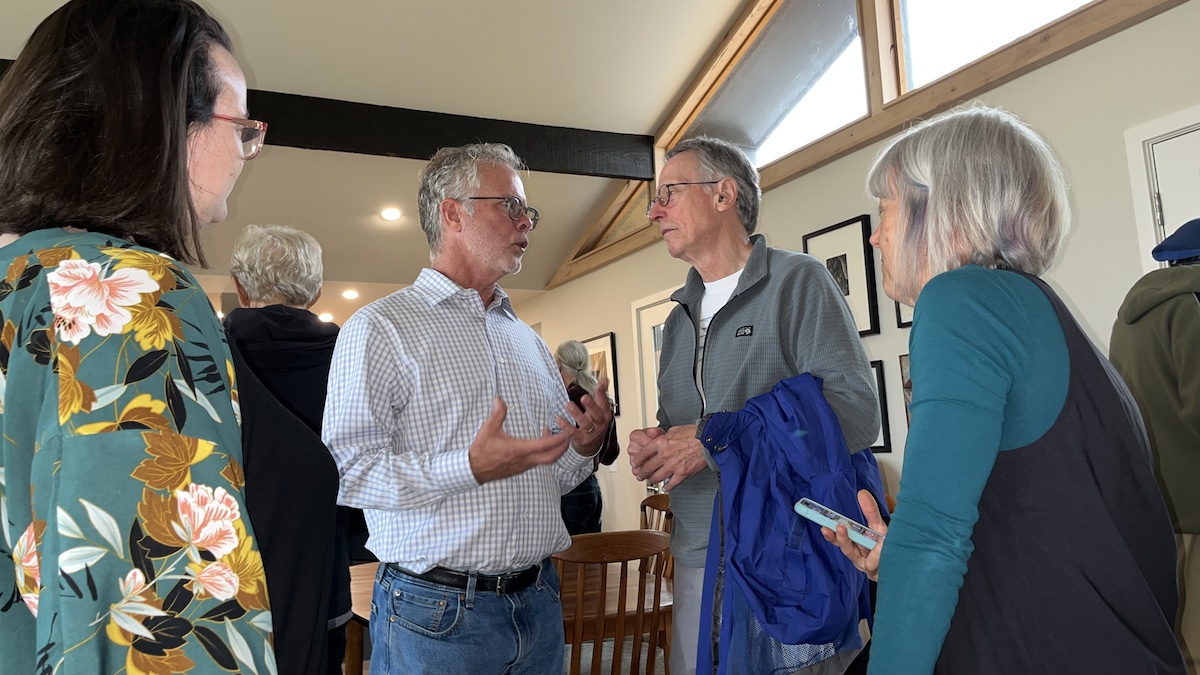
Chris and Tom North speak to the Lawrence Modern group November 2, 2024

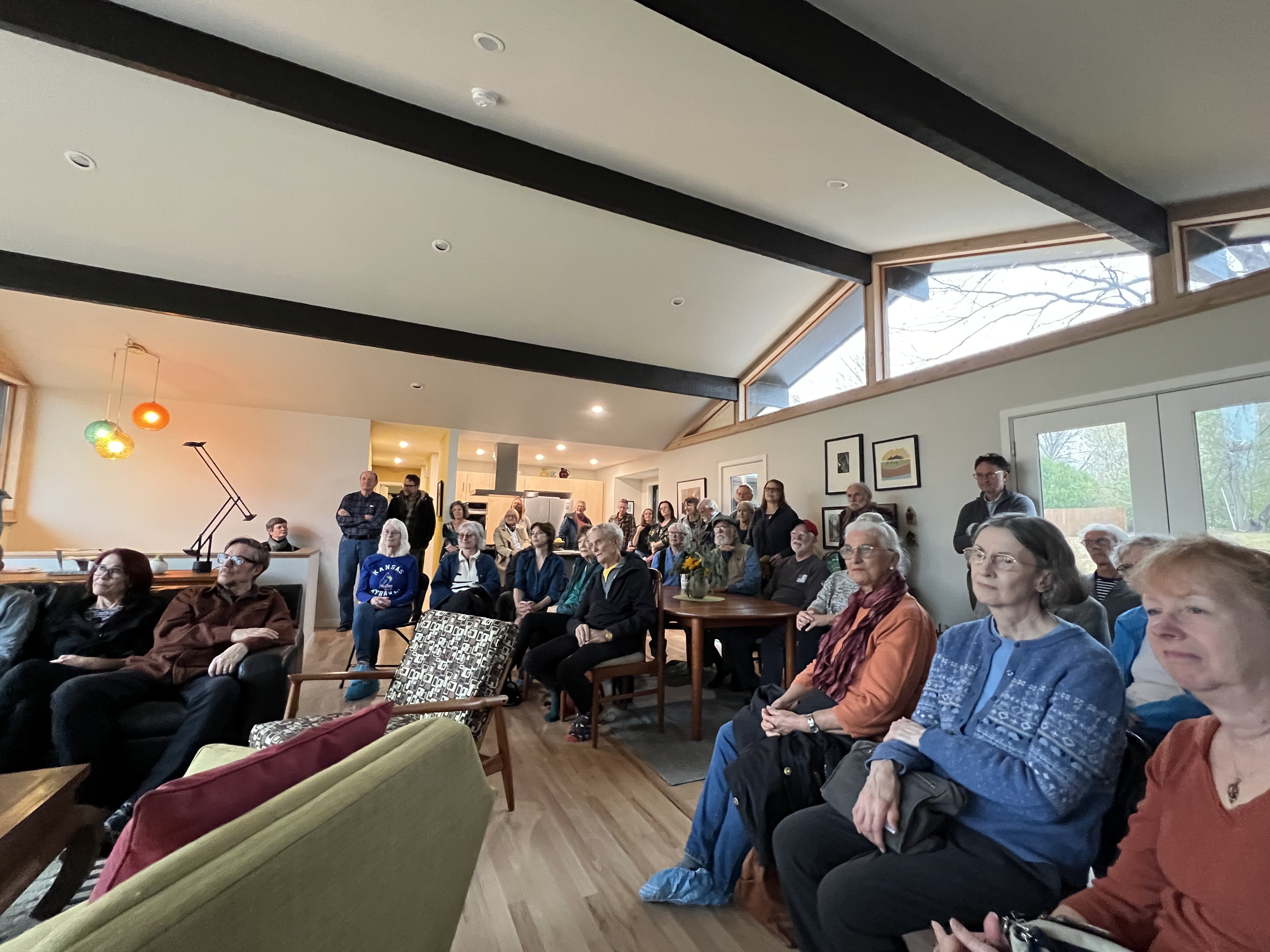
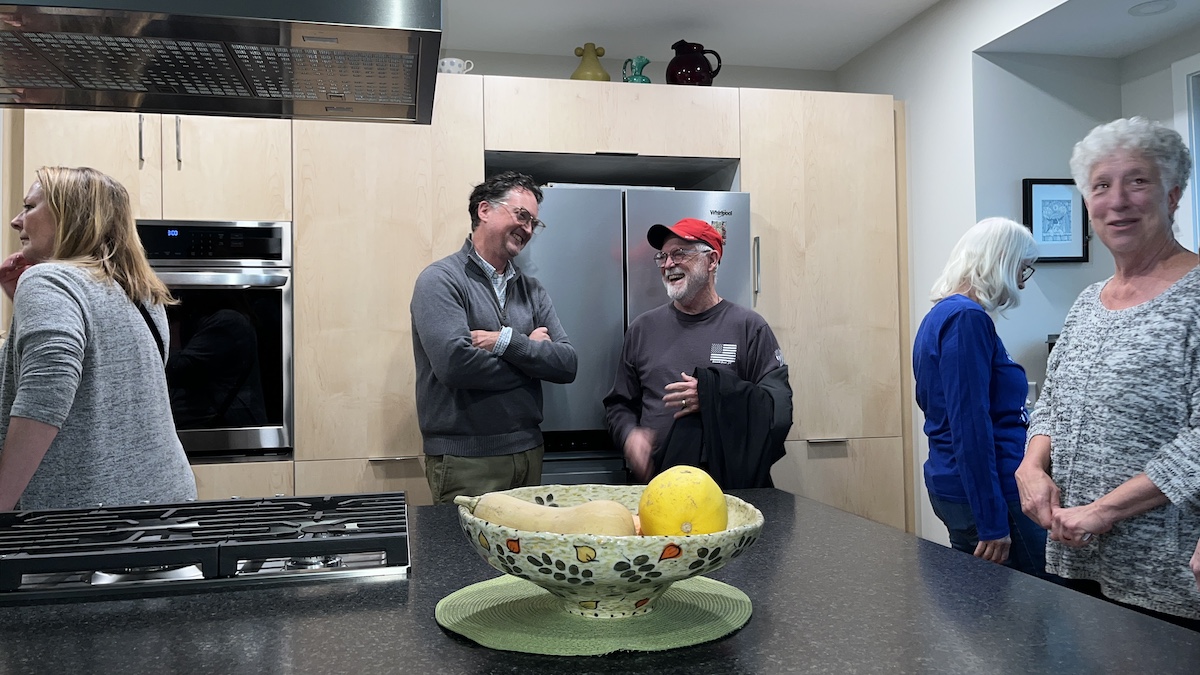
Saturday’s delightful tour of Chris and Tom North’s renovated midcentury modern home in Western Hills was a case study of how love at first sight can sometimes be mistaken for Love at First Bite. As the Norths told a healthy crowd of Lawrence Modern attendees, the forever home they purchased “on the spot” in 2022 was, as they later discovered, a former chow hall for an army of hungry termites.

“I ended up literally stripping every square inch of drywall down to the bare studs just to expose all the damage,” said Tom, a structural engineer with the U.S. Army Corps of Engineers. There was so much termite damage and wood rot that entire walls, structural members, and ceiling joists had to be replaced, requiring parts of the house to be jacked up, he said.

The little money-eating monsters demanded total surrender to the renovation gods, with a full gut on the inside, 90 percent gut on the outside, and nearly everything else needing replacement or repair. Despite all the problems, the Norths doubled down their resolve to preserve as much of the original 1961 house as possible.

“We want people to feel like this home started at another time and keep it true to its intent,” said Chris, an artist and designer.

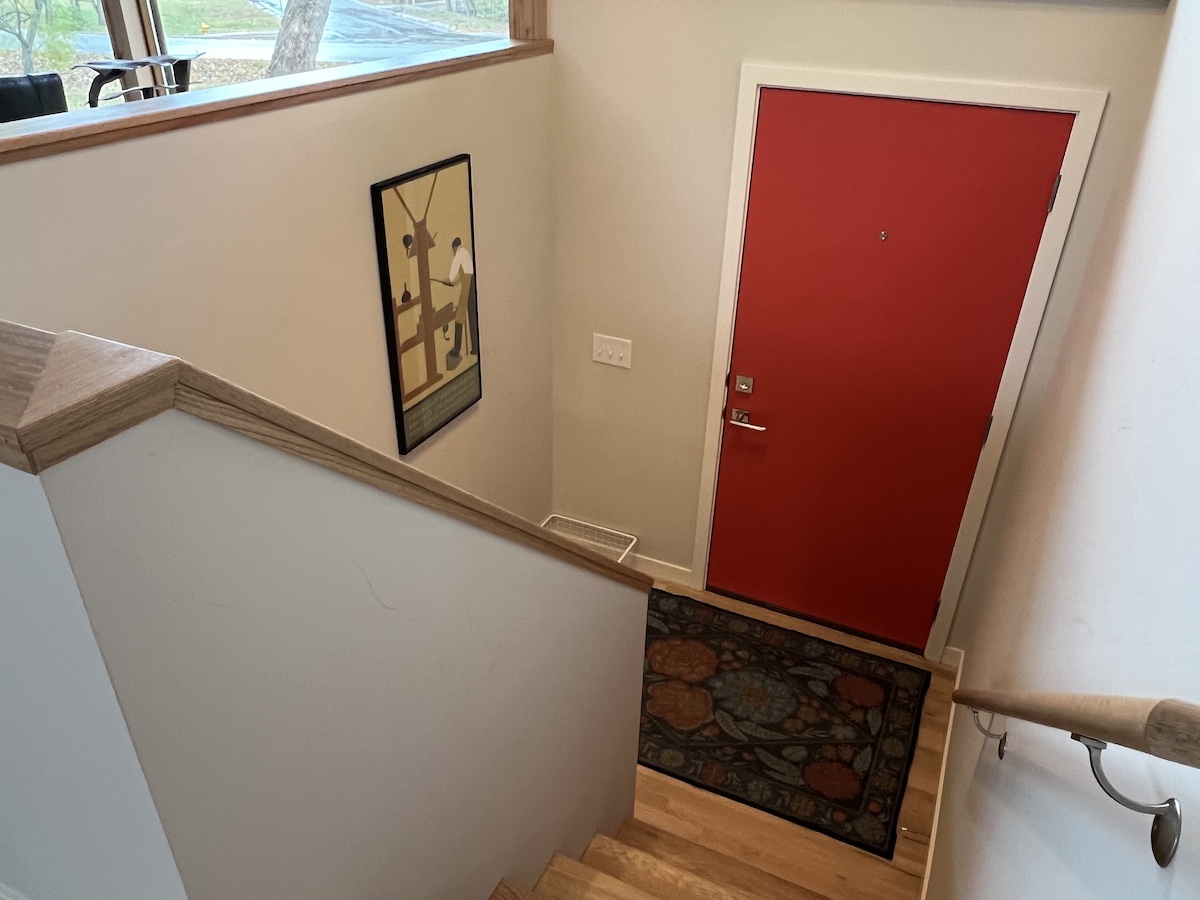
To the extent the Norths have successfully maintained the MCM vibe is in no small part due to its layout, which architect Jim Williams described to the group as a “Big G”: you enter the house from the attached single-car garage below and wind your way up to the kitchen and living room like in a G pattern. This way you don’t have to walk out in the rain or the snow to get to the garage, he said. The rest is the familiar open plan—contemporary then as it is today.

“This concept is all over town,” Williams said.

According to Tom, 4010 West 13th St. is possibly the work of builder Donald Scholz of Toledo, who, like many other builders of the era, cribbed California contemporary into their house plans. The theory goes that one of Scholz’s offices was in Overland Park and a local builder purchased the plans for a spec house with the intention of selling lots in the newly established Western Hills neighborhood. Another theory is that former KU architecture professor and Sunset Magazine editor Curtis Besinger was somehow involved in the design. As often happens when no drawings are left behind and no records exist downtown, the imagination runs wild.

But no matter who was involved, the termites will need to be tamed.

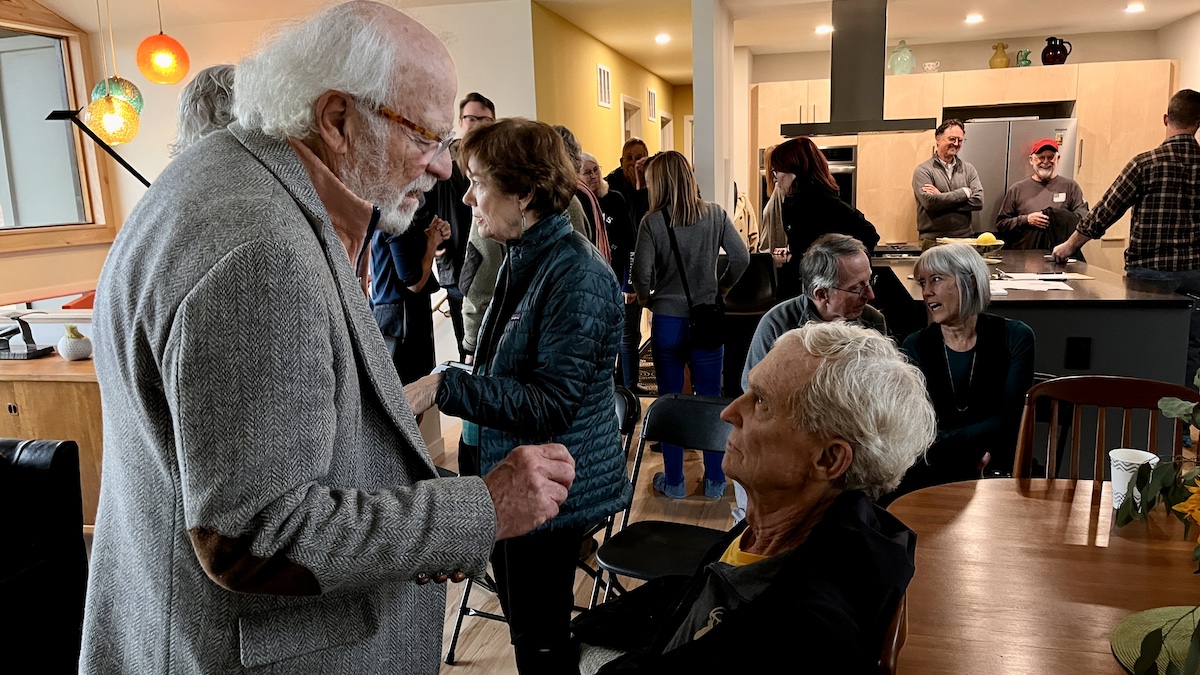
Thanks to all who attended and got to experience this fabulous house and hallelujah to the Norths, architect Chris Fein, and contractor Steve Koester for saving this light-filled cathedral of modern living for future generations to enjoy!

—Tom, Bill, Dennis & Tim

A profile that stands out

Lawrence Modern flyer: Midcentury A-Frame in West Hills, Saturday, November 2nd
Tim Hossler

If Tinder was a dating app site for houses instead of people, the home at 4010 West 13th St., our next Lawrence Modern hookup location, would be a definite swipe to the right. A tempting A-frame beauty with solid bone structure and sexy curb appeal, she was love at first sight for Chris and Tom North, a Portland, Ore. couple seeking to buy a midcentury modern retirement home in Lawrence during the pandemic.

“The house and site were a perfect fit for us,” said Chris, an artist and designer.

Only later did they fully realize that the house had, shall we say, some previous baggage. The former owners smoked heavily, the basement had issues, and the kitchen was dated. She needed a total makeover.

“It was a mess,” said Tom, a structural engineer with the U.S. Army Corps of Engineers.

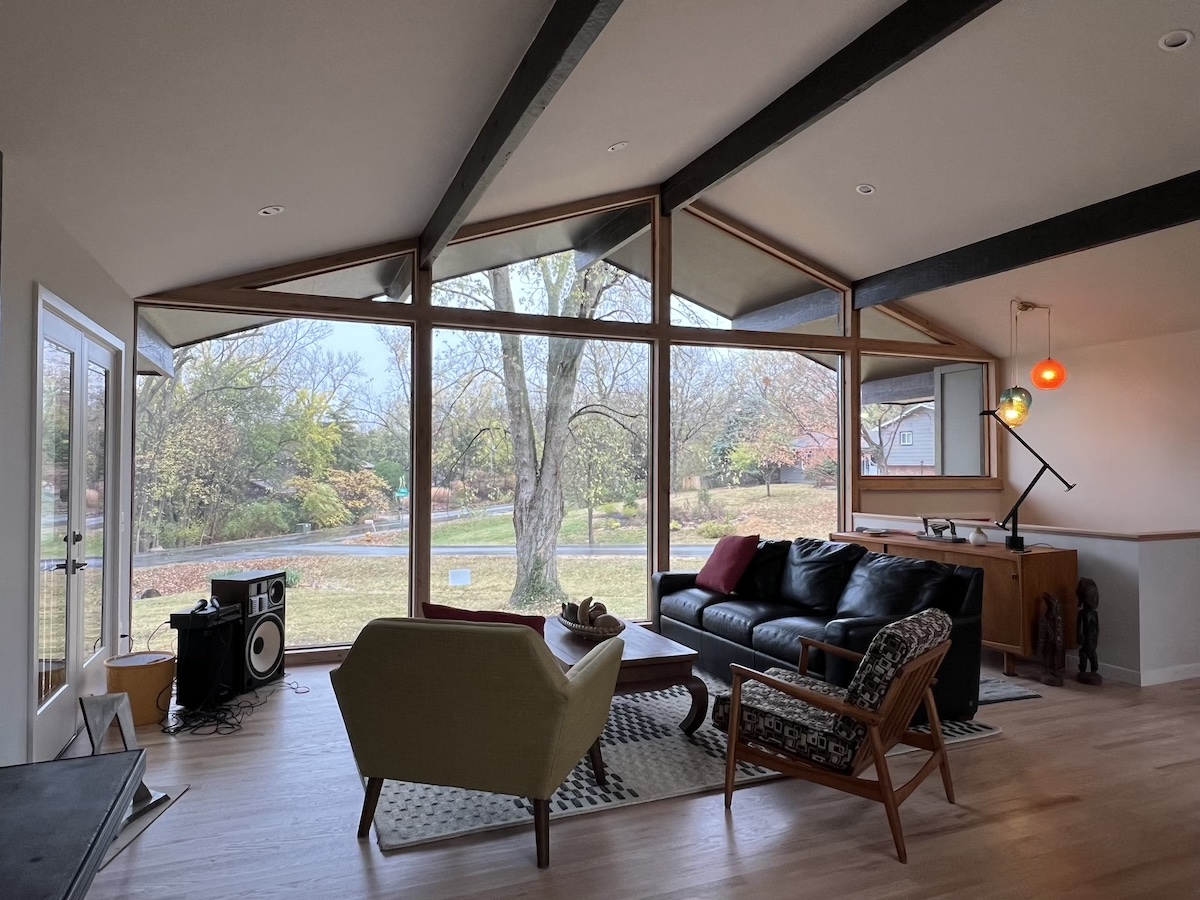
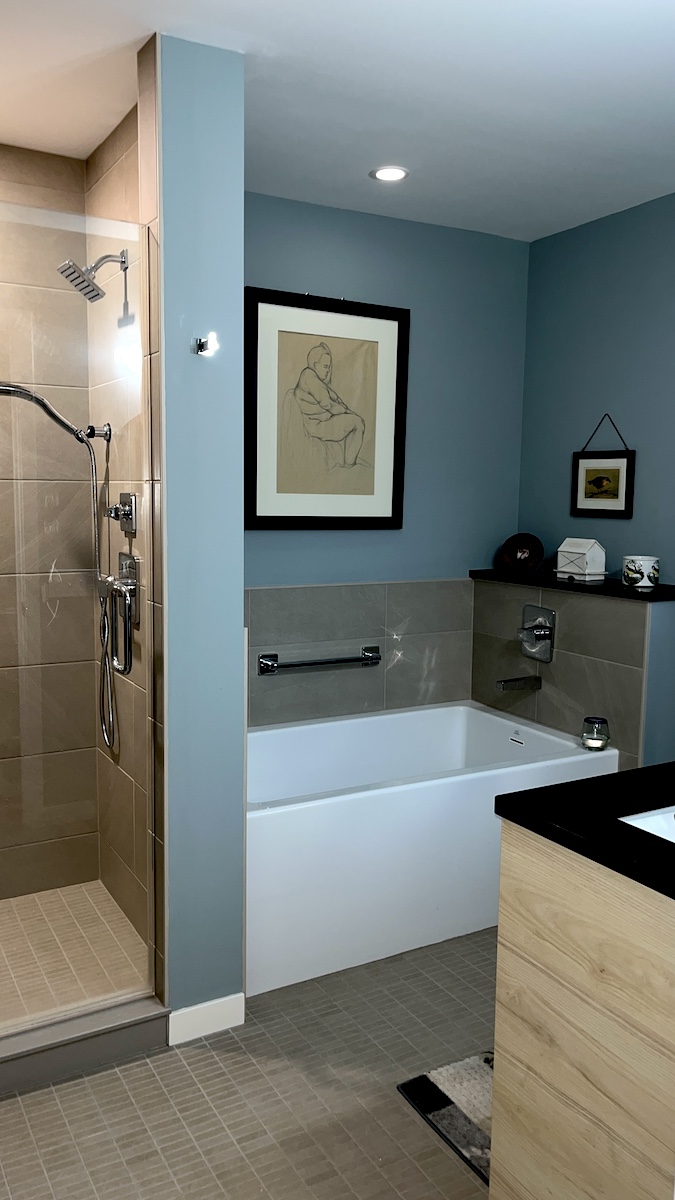
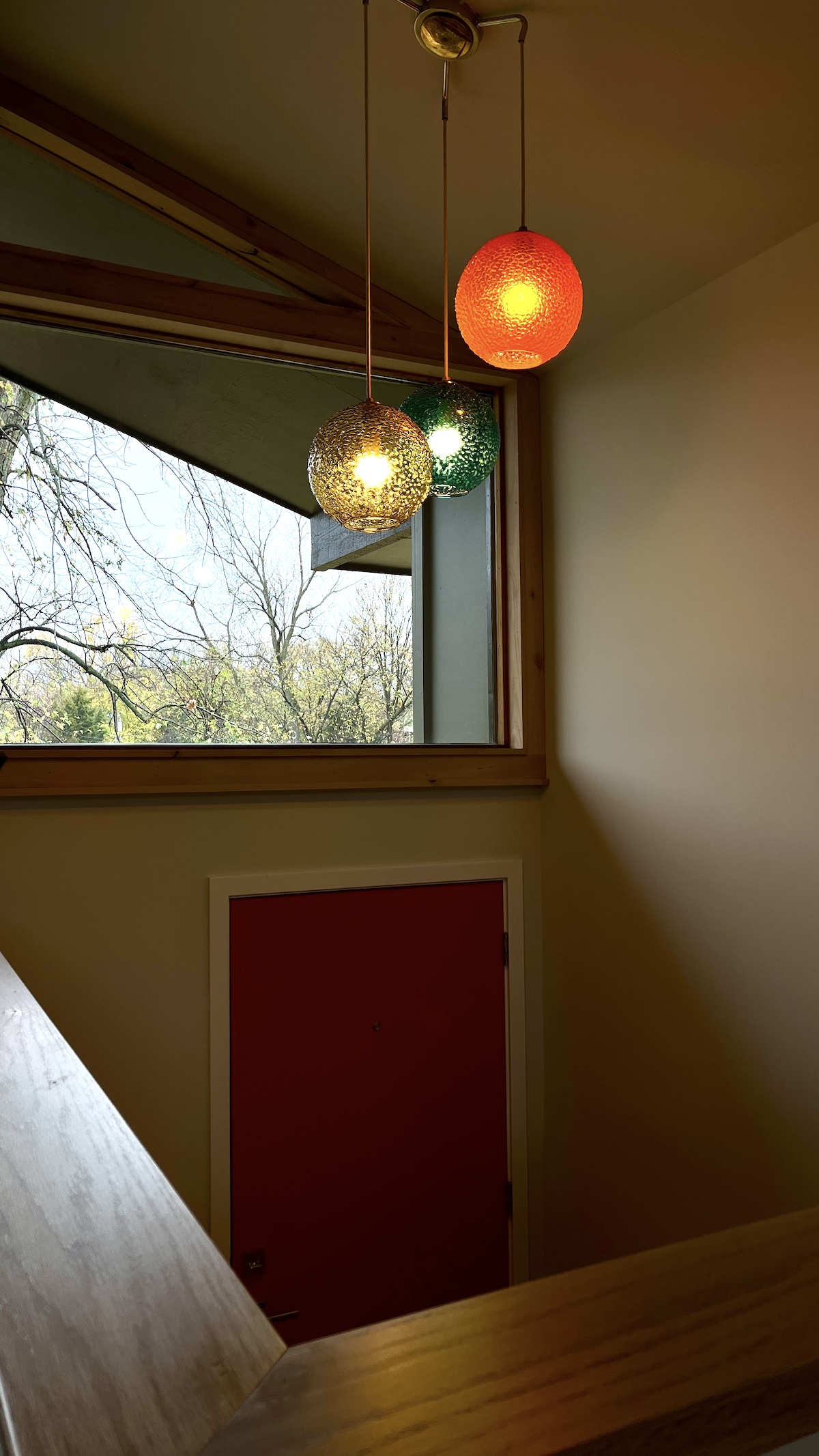
The Norths hired K-State assistant professor Chris Fein, AIA, to handle the remodeling design and Steve Koester of Koester Construction to do the reconstructive and cosmetic surgery. A bedroom wing with a bathroom was added, new architectural lighting was installed to enhance the house’s lofty foyer, living room, kitchen, and dining spaces, and the soaring curtain wall—the house’s main attraction—was replaced with energy-efficient glass. Cool midcentury bits like the colorful modernistic light fixture above the entry stairs were, thankfully, left untouched. Two years in the making, the result is an attractive and period-correct refresh of this 60-year-old gem.

We are delighted and thankful that the Norths have invited Lawrence Modern to view their creation in the West Hills neighborhood, an area with a diverse collection of midcentury architecture. We’re also excited to hear what it’s really like to live with their new long-term partner, warts and all.

The open house will be on November 2nd from 1:00 – 3:00, with a presentation at 2:00 p.m.

We look forward to seeing you there!

                    —Tom, Bill, Dennis & Tim

Kiss Me Deadly June 30th!

The next film in our series exploring modernism in the movies, Robert Aldrich’s acerbic 1955 noir classic Kiss Me Deadly, will screen at the end of the Lawrence Arts Center’s Free State Film Festival on June 30th. Lawrence Modern’s in-house film buff Kellee Pratt will once again introduce the film, followed by a virtual Q&A with noted biographer and author Alan K. Rode, a frequent presenter at the TCM Classic Film Festival, Noir City Hollywood and Chicago film festivals.

A fever dream of seduction and the threat of nuclear annihilation, Kiss Me Deadly was easily the most enigmatic film to come out of Hollywood in the 1950s. The plotline is delightfully cryptic: private investigator Mike Hammer (Ralph Meeker) has a line on something big, but he can’t quite figure out what it is. (His loyal aide and part-time lover Velda (Maxine Cooper) calls it the “Great Whatsit.”) A philandering, penny-ante gumshoe, Hammer finds himself at the center of a complex web of intrigue that includes the cops, the feds, the Mafia, and a mysterious glowing box hidden in a locker at the Hollywood Athletic Club. Mike zooms around midcentury L.A. in a shiny new Corvette trying to stitch it all together, all the while cracking heads and smashing vinyl records, taking us on a wild and crazy ride at breakneck speed. There is no other film noir quite like it, and fewer still have left such a lasting impression. The film inspired a generation of filmmakers—François Truffaut and Jean-Luc Godard cited Deadly as one of the biggest influences on the French New Wave—and movies such as Raiders of the Lost Ark, Repo Man, and Pulp Fiction have paid homage to it.

“‘Kiss Me Deadly’ represents a cultural crossroad where classic film noir experienced a cinematic head-on collision with Cold War paranoia,” Rode writes. “The essential private eye created by Dashiell Hammett and Raymond Chandler evolved into A.I. Bezzerides and Robert Aldrich’s brutally magnified vision of Mickey Spillane’s atomic age sleuth Mike Hammer. Star Ralph Meeker’s scorched earth sojourn through a crumbling, post-World War II Los Angeles is unforgettable cinema.”  

Please join us at the Lawrence Arts Center on June 30th to enjoy this apocalyptic noir in the comfort and safety of an air-conditioned theater. Tickets can be purchased here.

Big thanks to Alan K. Rode for supporting our film series. Special thanks to the Lawrence Arts Center for collaborating with us and generously programming us into this year’s festival.

Kiss Me Deadly trailer | Criterion Collection review | Free State FF tickets | Alan K. Rode bio