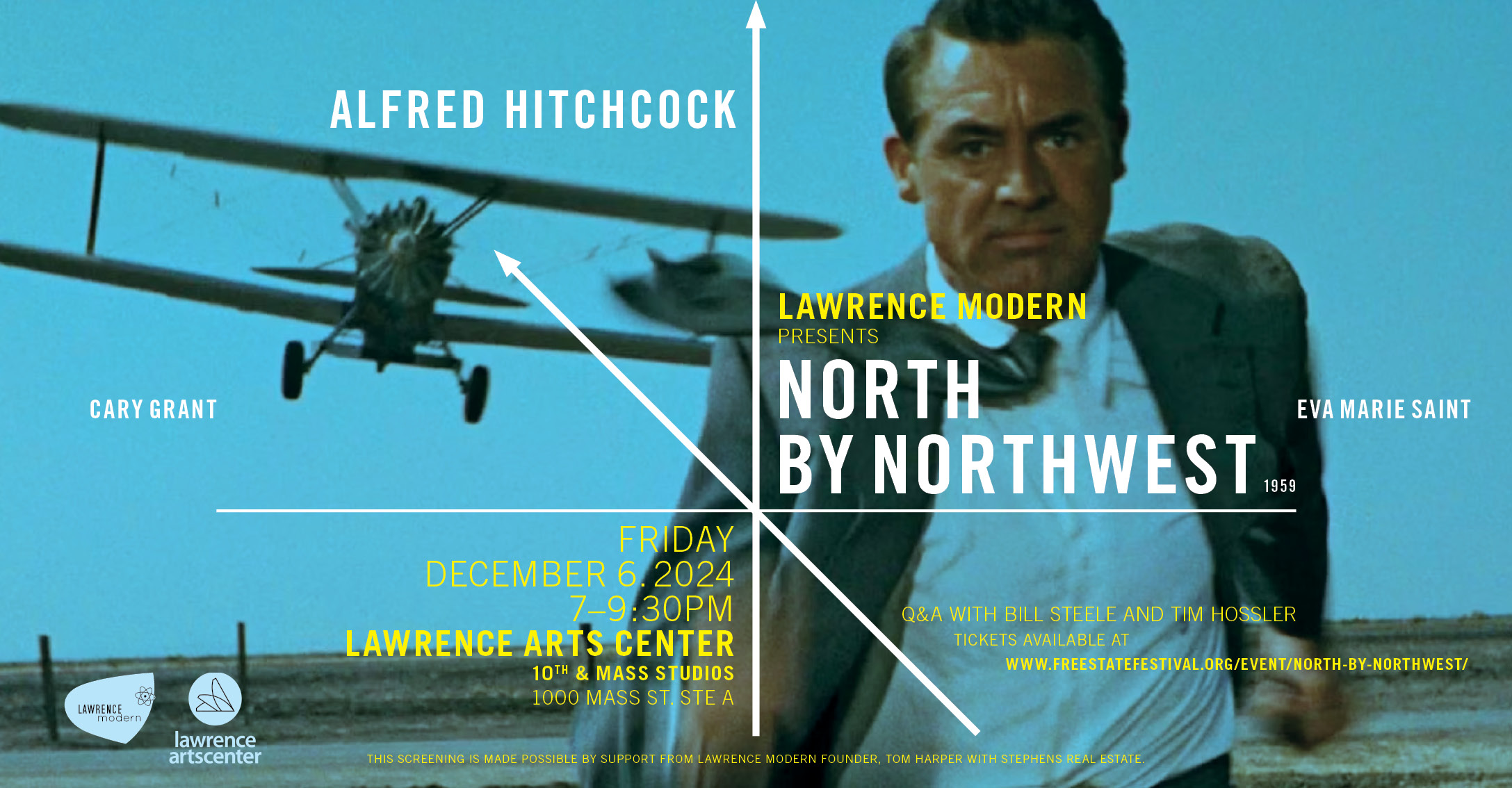
Alfred Hitchcock’s playful light comedyNorth by Northwest, next up in our Modernism in Film series queue, is the perfect tonic to soothe our post-election anxieties. A film set in 1950s paranoia, it stars an urbane and witty Cary Grant as advertising executive Roger Thornhill, who gets mistaken for a spy and is on the run from a sinister organization run by suave villain Phillip Vandamm (James Mason), who owns an ultramodern retreat atop Mt. Rushmore. It is one of Hitchcock’s most entertaining movies, cooly sophisticated and suspenseful yet romantic and warm. It’s also a gleaming 50s Cadillac of filmmaking craft, well-appointed in graphic design (Saul Bass), cinematography (Robert Burks), and production design (Robert Boyle). All captured in the luscious widescreen beauty of VistaVision Technicolor, where everyone and just about everything looks clean, modern, beautiful, and luxurious. A dusty cornfield has never looked so good.
And it only gets better with age. Over the summer, Martin Scorcese’s Film Foundation and Warner Bros. released a restored print of North by Northwest in glorious 70mm that, for the first time, fully exploits the high resolution of the VistaVision format. While we can’t screen 70mm at the Lawrence Arts Center’s Microcinema, we hope to have the next best thing: a soon-to-be-released 4K Ultra HD Blu-ray that will reveal every speck of dandruff in Cary Grant’s expertly coiffed hair and pressed suits.
Our special guest will be Lawrence Modern’s Tim Hossler, associate professor and chairperson of KU’s design department. (As some may know, Tim is our in-house graphics designer who creates our event flyers.) As the former in-house art director for photographer Annie Leibovitz, Tim is as enthralled as any movie lover of North by Northwest’s iconic images and modernist design sensibility, which he will converse over with fellow Lawrence Modern cinephile and moderator Bill Steele.
Tickets can be purchased here or at the door for $10. The program will start promptly @7PM. Runtime is 2 hrs. 16 min. Get tickets now—the last show we did at the Microcinema, Vertigo, sold out!
Many thanks to the Lawrence Arts Center for their continued support of the Lawrence Modern film series.
North by Northwest 4K HD trailer | Criterion Collection review | LAC tickets | Tim Hossler bio
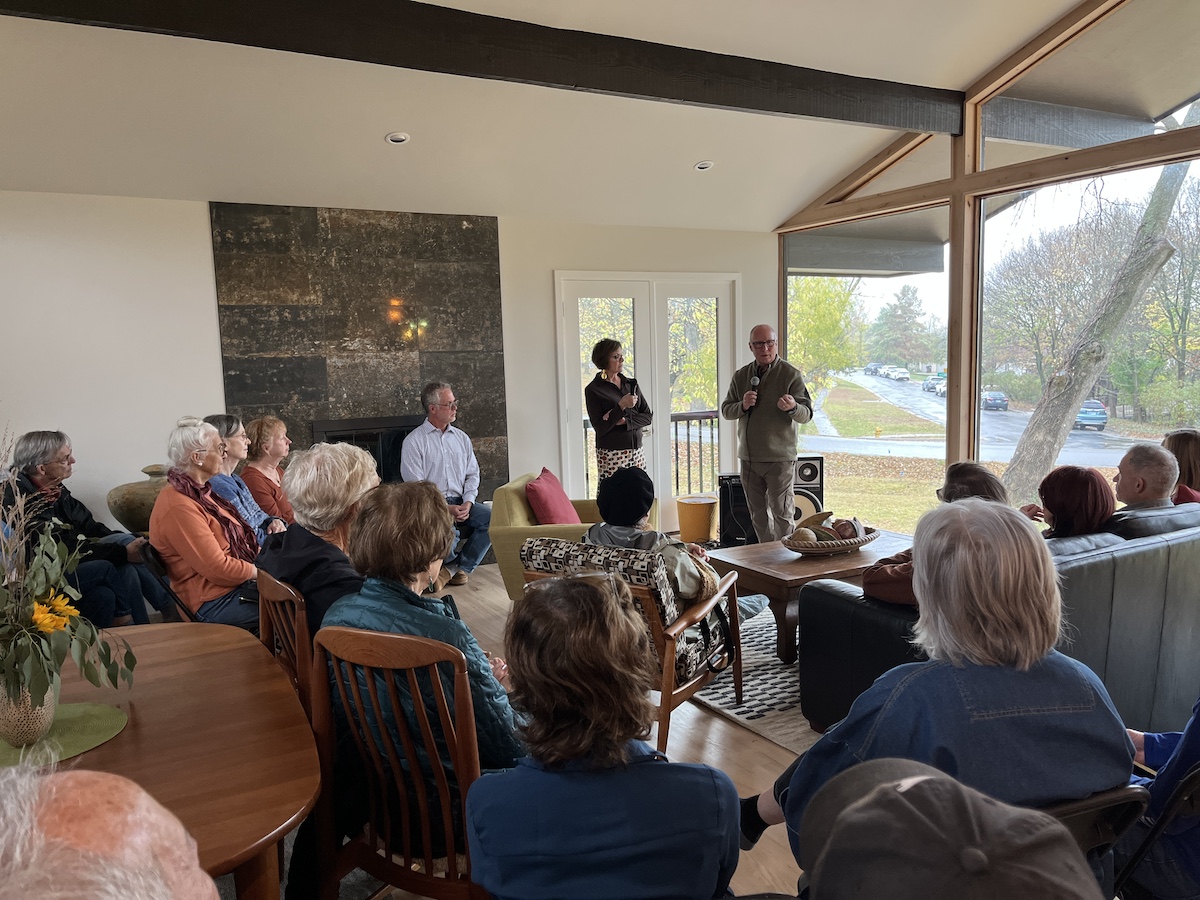
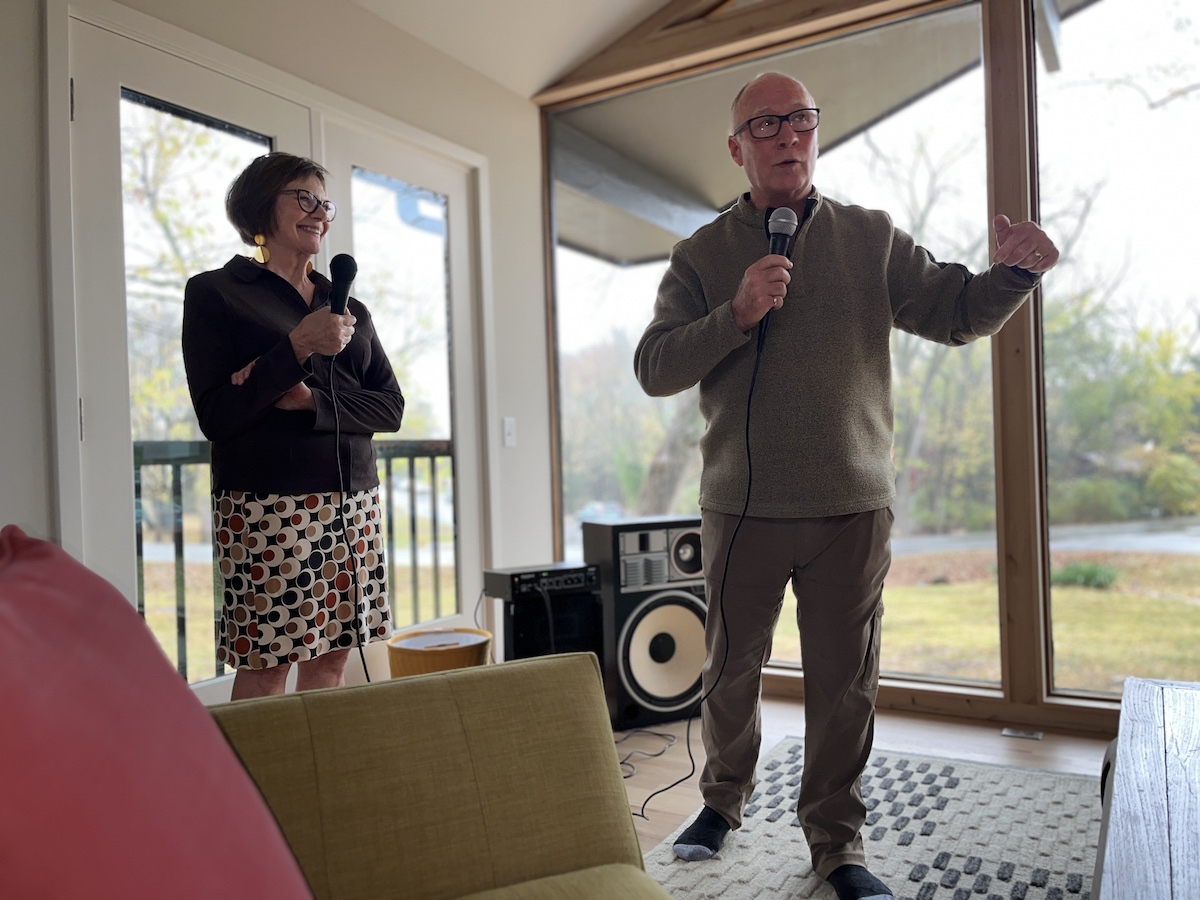
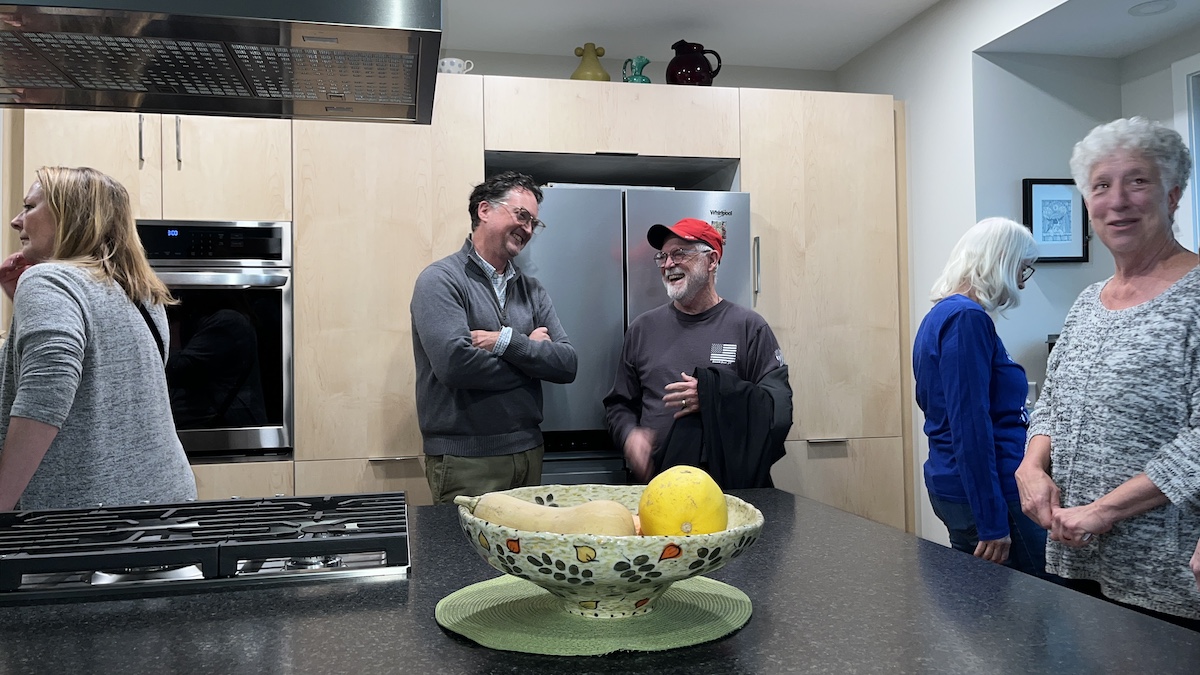
Chris and Tom North speak to the Lawrence Modern group November 2, 2024
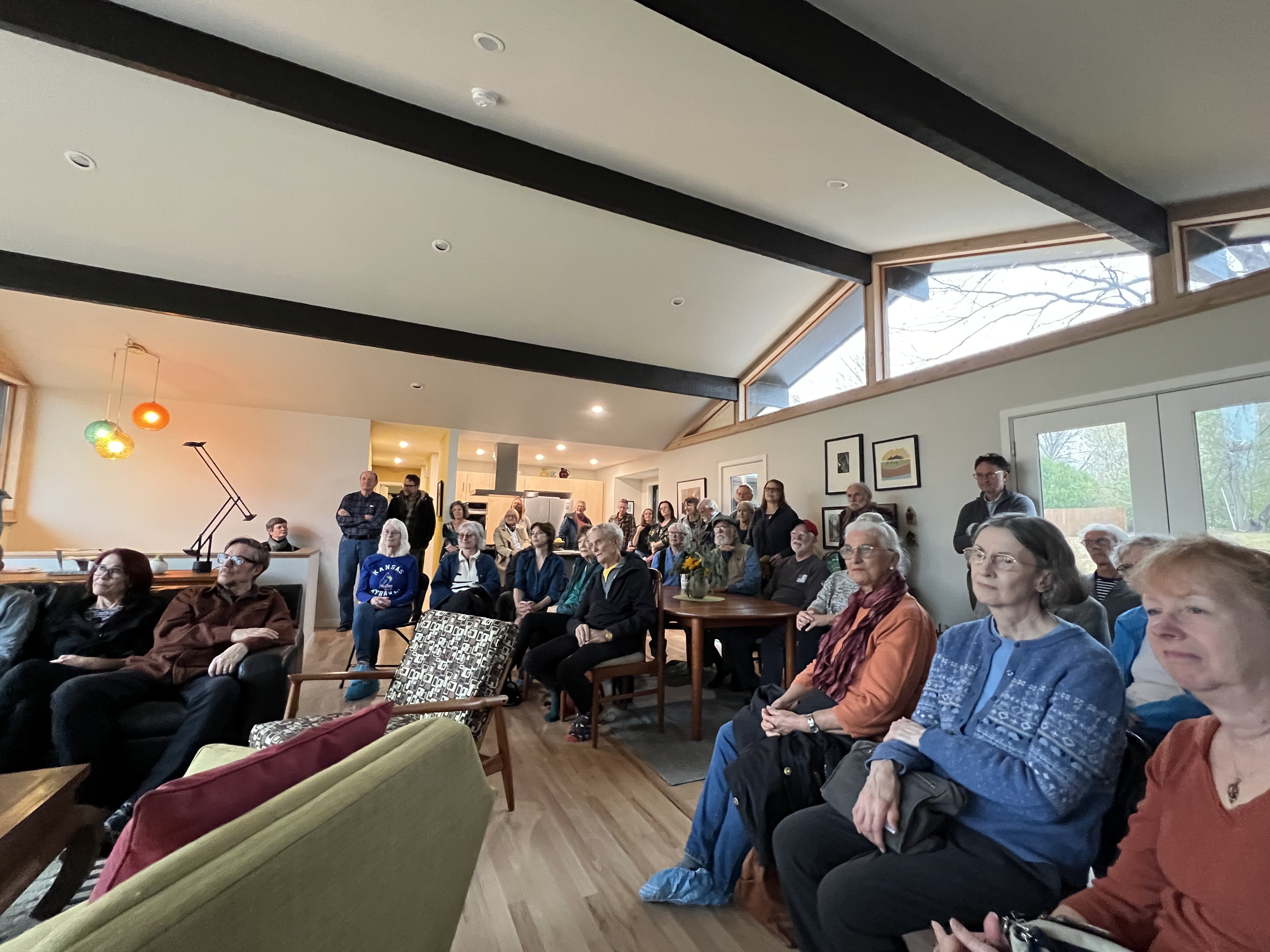
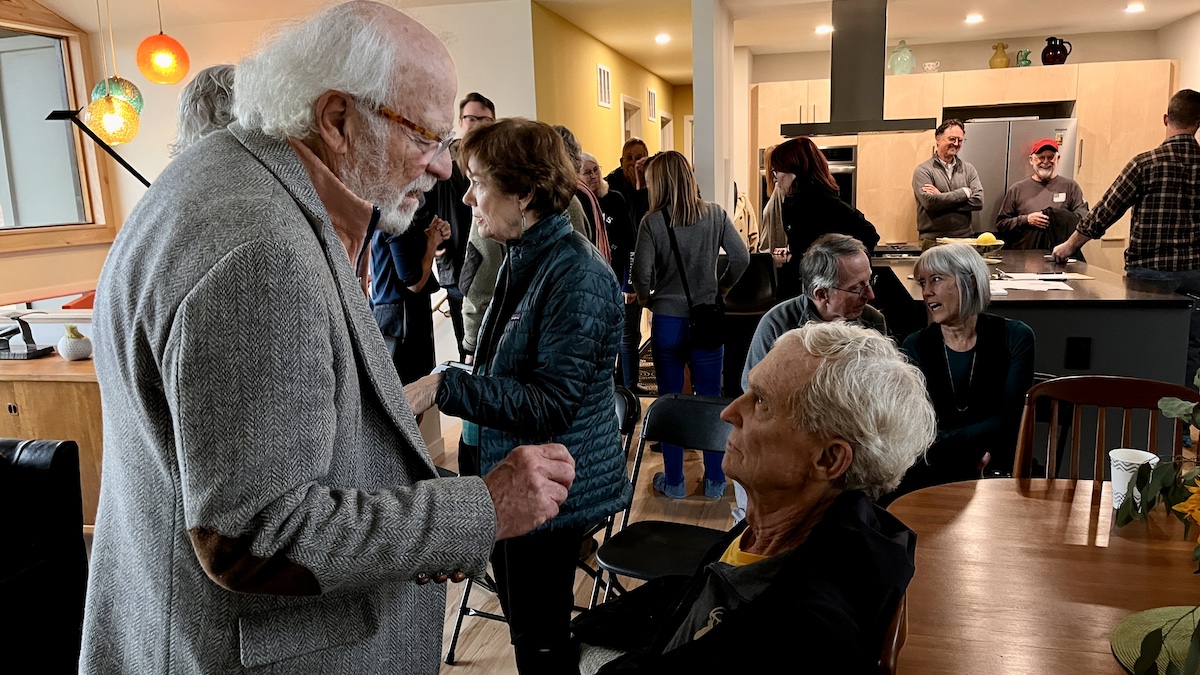
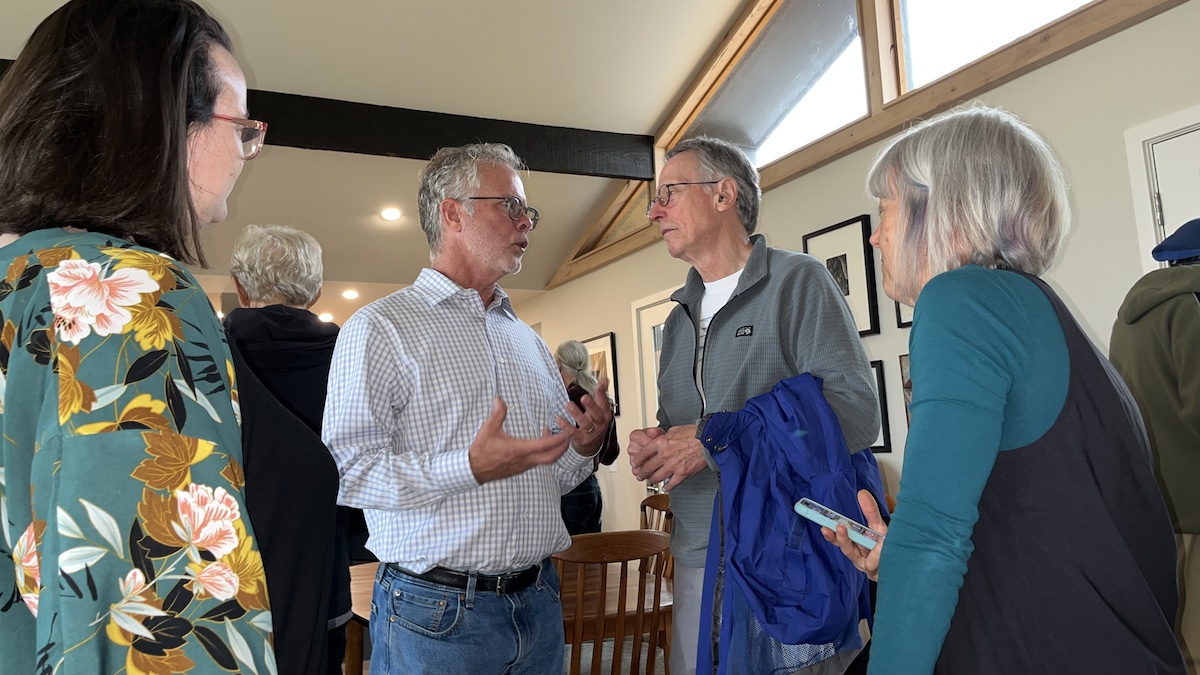
Saturday’s delightful tour of Chris and Tom North’s renovated midcentury modern home in Western Hills was a case study of how love at first sight can sometimes be mistaken for Love at First Bite. As the Norths told a healthy crowd of Lawrence Modern attendees, the forever home they purchased “on the spot” in 2022 was, as they later discovered, a former chow hall for an army of hungry termites.
“I ended up literally stripping every square inch of drywall down to the bare studs just to expose all the damage,” said Tom, a structural engineer with the U.S. Army Corps of Engineers. There was so much termite damage and wood rot that entire walls, structural members, and ceiling joists had to be replaced, requiring parts of the house to be jacked up, he said.
The little money-eating monsters demanded total surrender to the renovation gods, with a full gut on the inside, 90 percent gut on the outside, and nearly everything else needing replacement or repair. Despite all the problems, the Norths doubled down their resolve to preserve as much of the original 1961 house as possible.
“We want people to feel like this home started at another time and keep it true to its intent,” said Chris, an artist and designer.
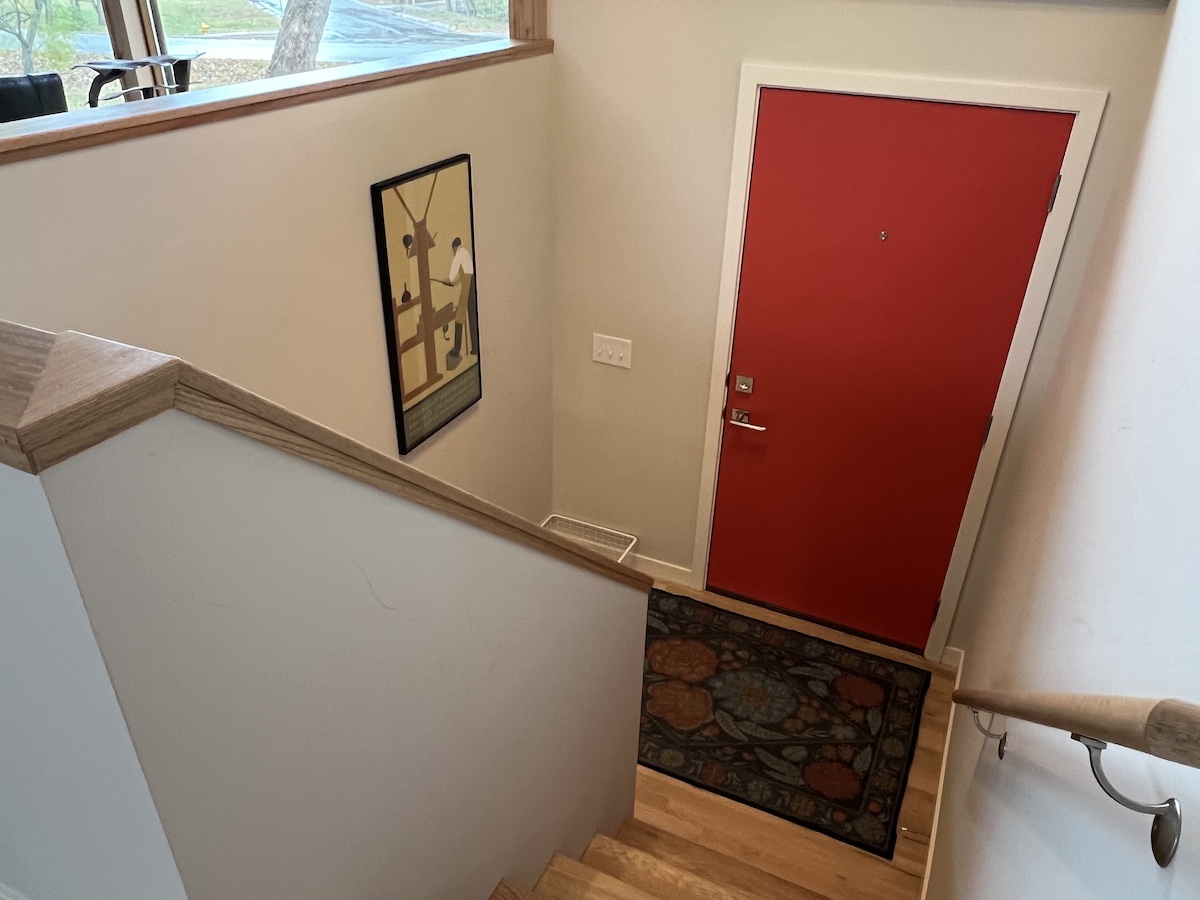
To the extent the Norths have successfully maintained the MCM vibe is in no small part due to its layout, which architect Jim Williams described to the group as a “Big G”: you enter the house from the attached single-car garage below and wind your way up to the kitchen and living room like in a G pattern. This way you don’t have to walk out in the rain or the snow to get to the garage, he said. The rest is the familiar open plan—contemporary then as it is today.
“This concept is all over town,” Williams said.
According to Tom, 4010 West 13th St. is possibly the work of builder Donald Scholz of Toledo, who, like many other builders of the era, cribbed California contemporary into their house plans. The theory goes that one of Scholz’s offices was in Overland Park and a local builder purchased the plans for a spec house with the intention of selling lots in the newly established Western Hills neighborhood. Another theory is that former KU architecture professor and Sunset Magazine editor Curtis Besinger was somehow involved in the design. As often happens when no drawings are left behind and no records exist downtown, the imagination runs wild.
But no matter who was involved, the termites will need to be tamed.
Thanks to all who attended and got to experience this fabulous house and hallelujah to the Norths, architect Chris Fein, and contractor Steve Koester for saving this light-filled cathedral of modern living for future generations to enjoy!
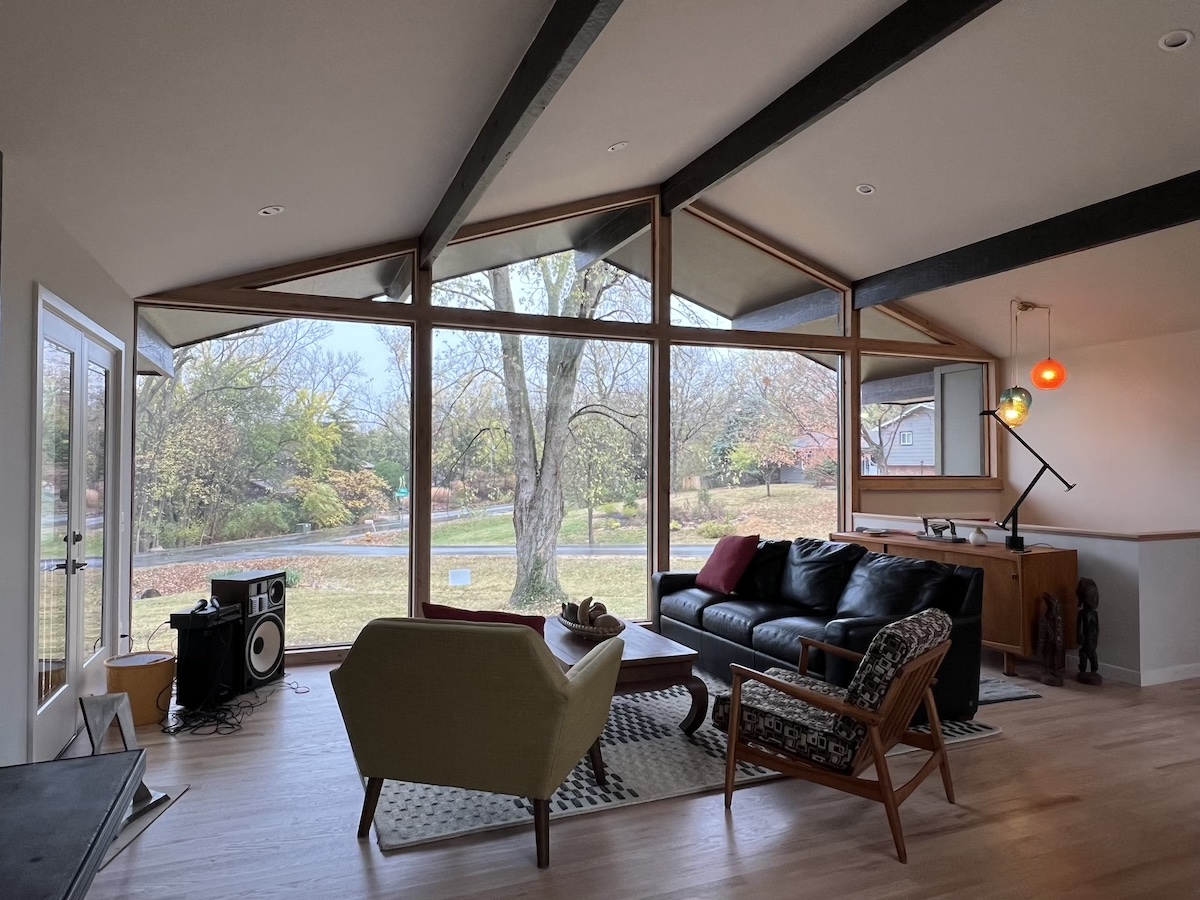
If Tinder was a dating app site for houses instead of people, the home at 4010 West 13th St., our next Lawrence Modern hookup location, would be a definite swipe to the right. A tempting A-frame beauty with solid bone structure and sexy curb appeal, she was love at first sight for Chris and Tom North, a Portland, Ore. couple seeking to buy a midcentury modern retirement home in Lawrence during the pandemic.
“The house and site were a perfect fit for us,” said Chris, an artist and designer.
Only later did they fully realize that the house had, shall we say, some previous baggage. The former owners smoked heavily, the basement had issues, and the kitchen was dated. She needed a total makeover.
“It was a mess,” said Tom, a structural engineer with the U.S. Army Corps of Engineers.
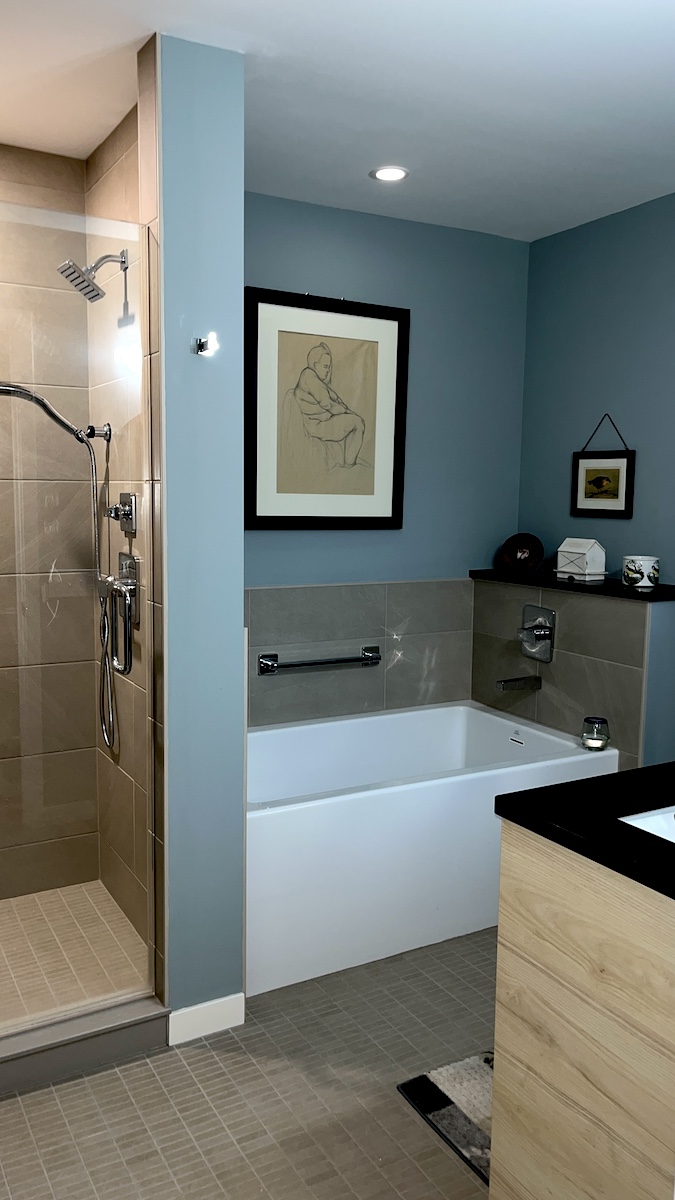
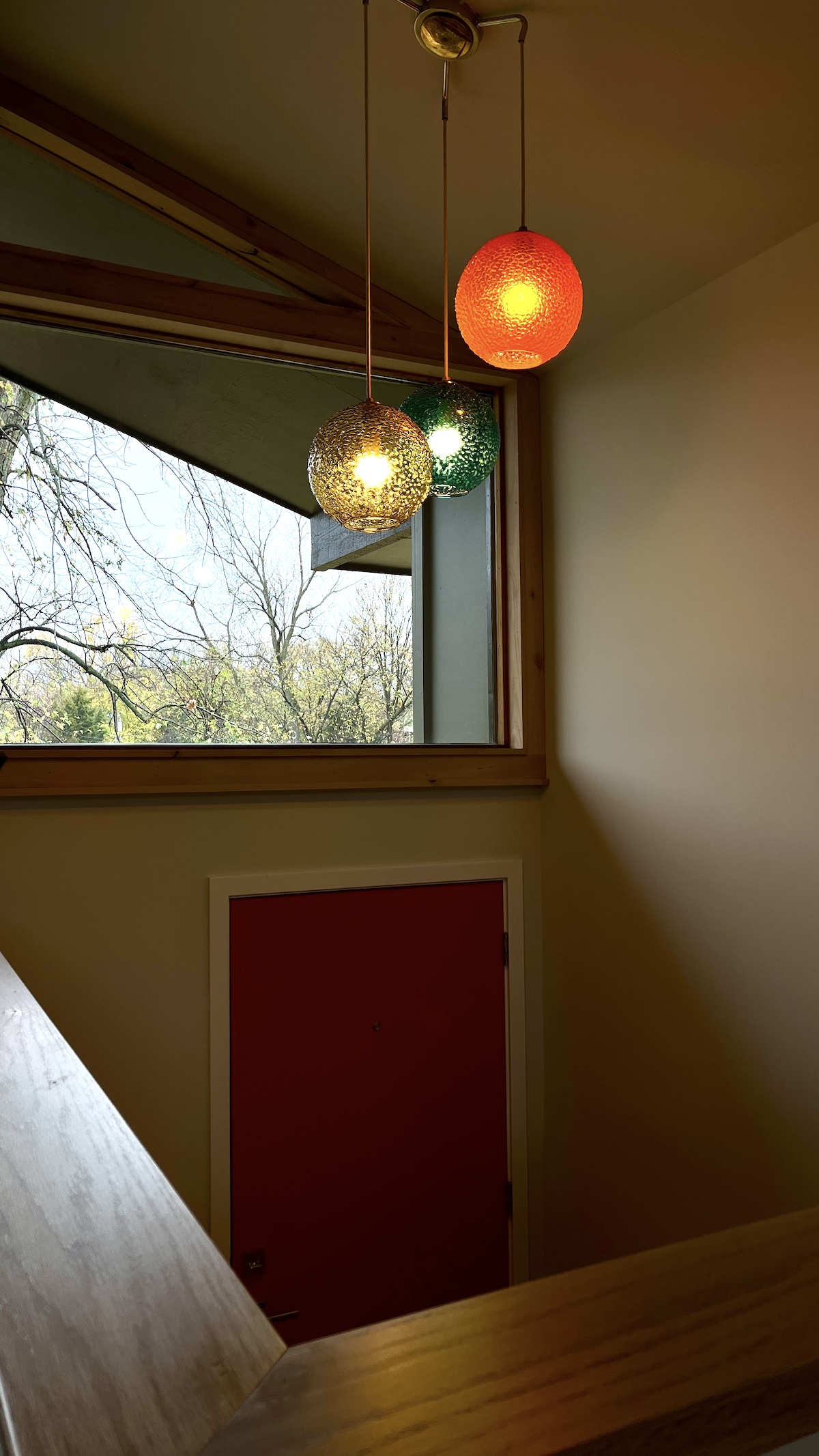
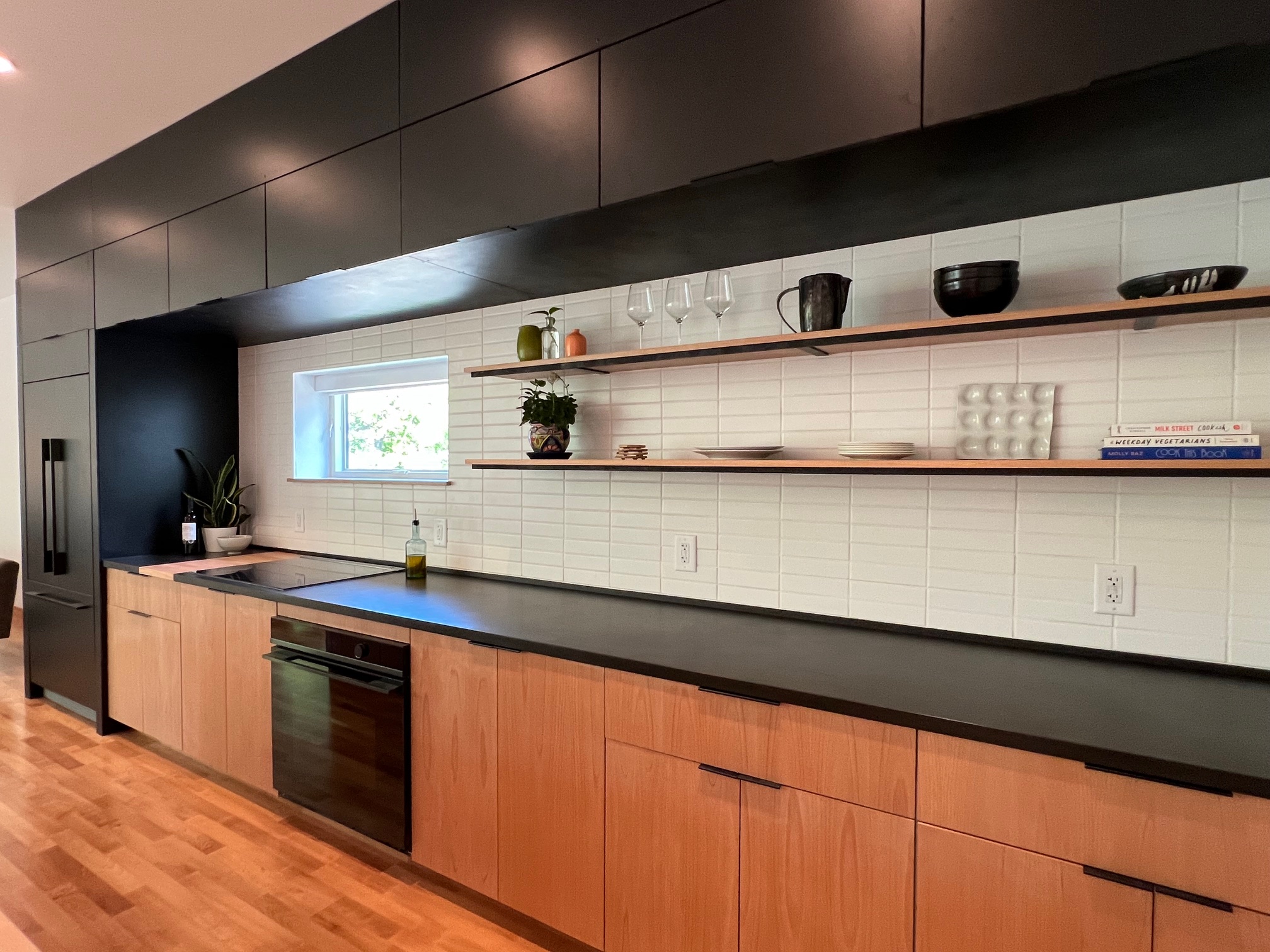
The Norths hired K-State assistant professor Chris Fein, AIA, to handle the remodeling design and Steve Koester of Koester Construction to do the reconstructive and cosmetic surgery. A bedroom wing with a bathroom was added, new architectural lighting was installed to enhance the house’s lofty foyer, living room, kitchen, and dining spaces, and the soaring curtain wall—the house’s main attraction—was replaced with energy-efficient glass. Cool midcentury bits like the colorful modernistic light fixture above the entry stairs were, thankfully, left untouched. Two years in the making, the result is an attractive and period-correct refresh of this 60-year-old gem.
We are delighted and thankful that the Norths have invited Lawrence Modern to view their creation in the West Hills neighborhood, an area with a diverse collection of midcentury architecture. We’re also excited to hear what it’s really like to live with their new long-term partner, warts and all.
The open house will be on November 2nd from 1:00 – 3:00, with a presentation at 2:00 p.m.
The next film in our series exploring modernism in the movies, Robert Aldrich’s acerbic 1955 noir classic Kiss Me Deadly, will screen at the end of the Lawrence Arts Center’s Free State Film Festival on June 30th. Lawrence Modern’s in-house film buff Kellee Pratt will once again introduce the film, followed by a virtual Q&A with noted biographer and author Alan K. Rode, a frequent presenter at the TCM Classic Film Festival, Noir City Hollywood and Chicago film festivals.
A fever dream of seduction and the threat of nuclear annihilation, Kiss Me Deadly was easily the most enigmatic film to come out of Hollywood in the 1950s. The plotline is delightfully cryptic: private investigator Mike Hammer (Ralph Meeker) has a line on something big, but he can’t quite figure out what it is. (His loyal aide and part-time lover Velda (Maxine Cooper) calls it the “Great Whatsit.”) A philandering, penny-ante gumshoe, Hammer finds himself at the center of a complex web of intrigue that includes the cops, the feds, the Mafia, and a mysterious glowing box hidden in a locker at the Hollywood Athletic Club. Mike zooms around midcentury L.A. in a shiny new Corvette trying to stitch it all together, cracking heads and smashing vinyl records, taking us on a wild and crazy ride at breakneck speed. There is no other film noir quite like it, and fewer still have left such a lasting impression. The film inspired a generation of filmmakers—François Truffaut and Jean-Luc Godard cited Deadly as one of the biggest influences on the French New Wave—and movies such as Raiders of the Lost Ark, Repo Man, and Pulp Fiction have paid homage to it.
“‘Kiss Me Deadly’ represents a cultural crossroad where classic film noir experienced a cinematic head-on collision with Cold War paranoia,” Rode writes. “The essential private eye created by Dashiell Hammett and Raymond Chandler evolved into A.I. Bezzerides and Robert Aldrich’s brutally magnified vision of Mickey Spillane’s atomic age sleuth Mike Hammer. Star Ralph Meeker’s scorched earth sojourn through a crumbling, post-World War II Los Angeles is unforgettable cinema.”
Please join us at the Lawrence Arts Center on June 30th to enjoy this apocalyptic noir in the comfort and safety of an air-conditioned theater. Tickets can be purchased here.
Big thanks to Alan K. Rode for supporting our film series. Special thanks to the Lawrence Arts Center for collaborating with us and generously programming us into this year’s festival.
Kiss Me Deadly trailer | Criterion Collection review | Free State FF tickets | Alan K. Rode bio
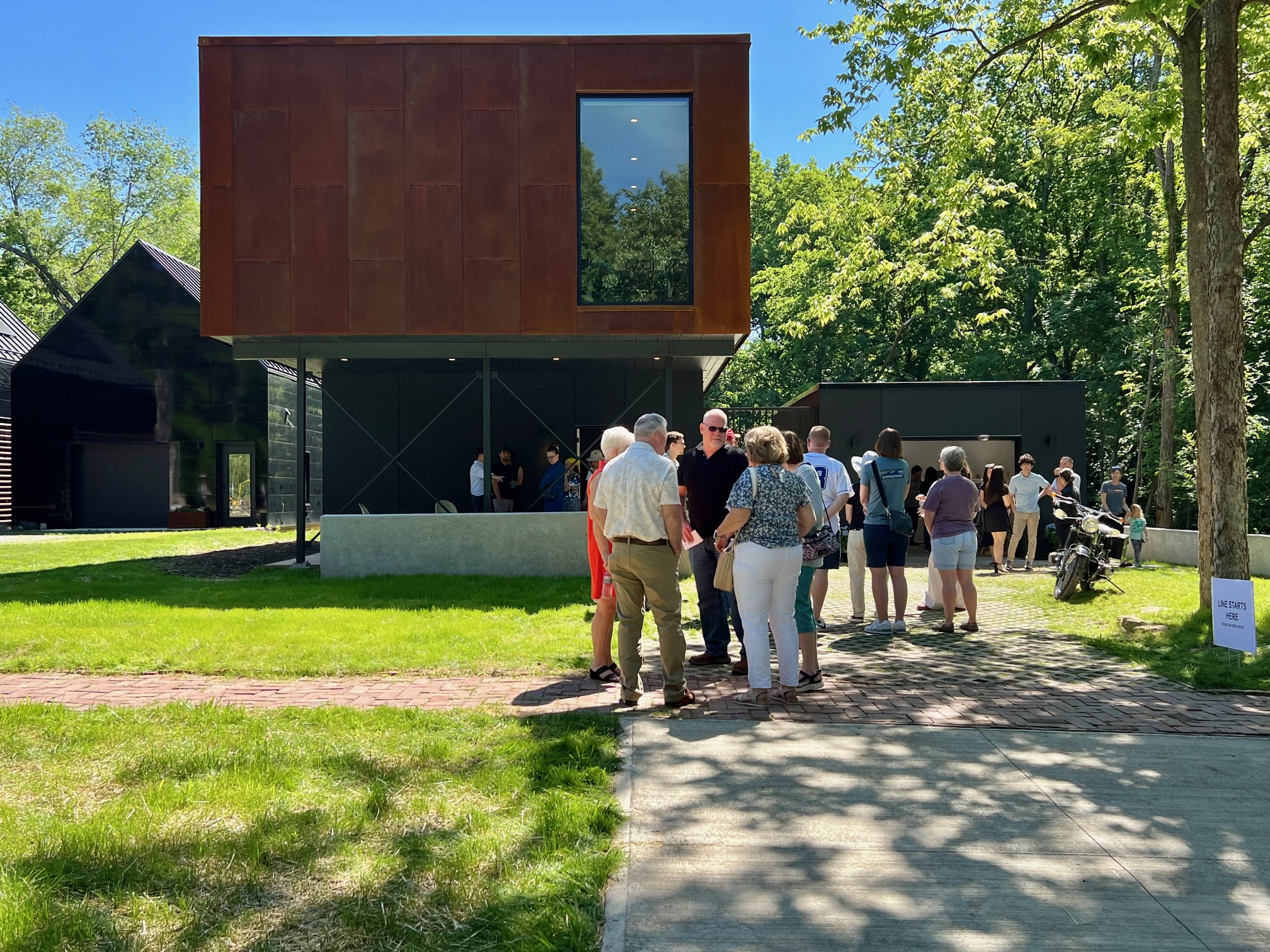
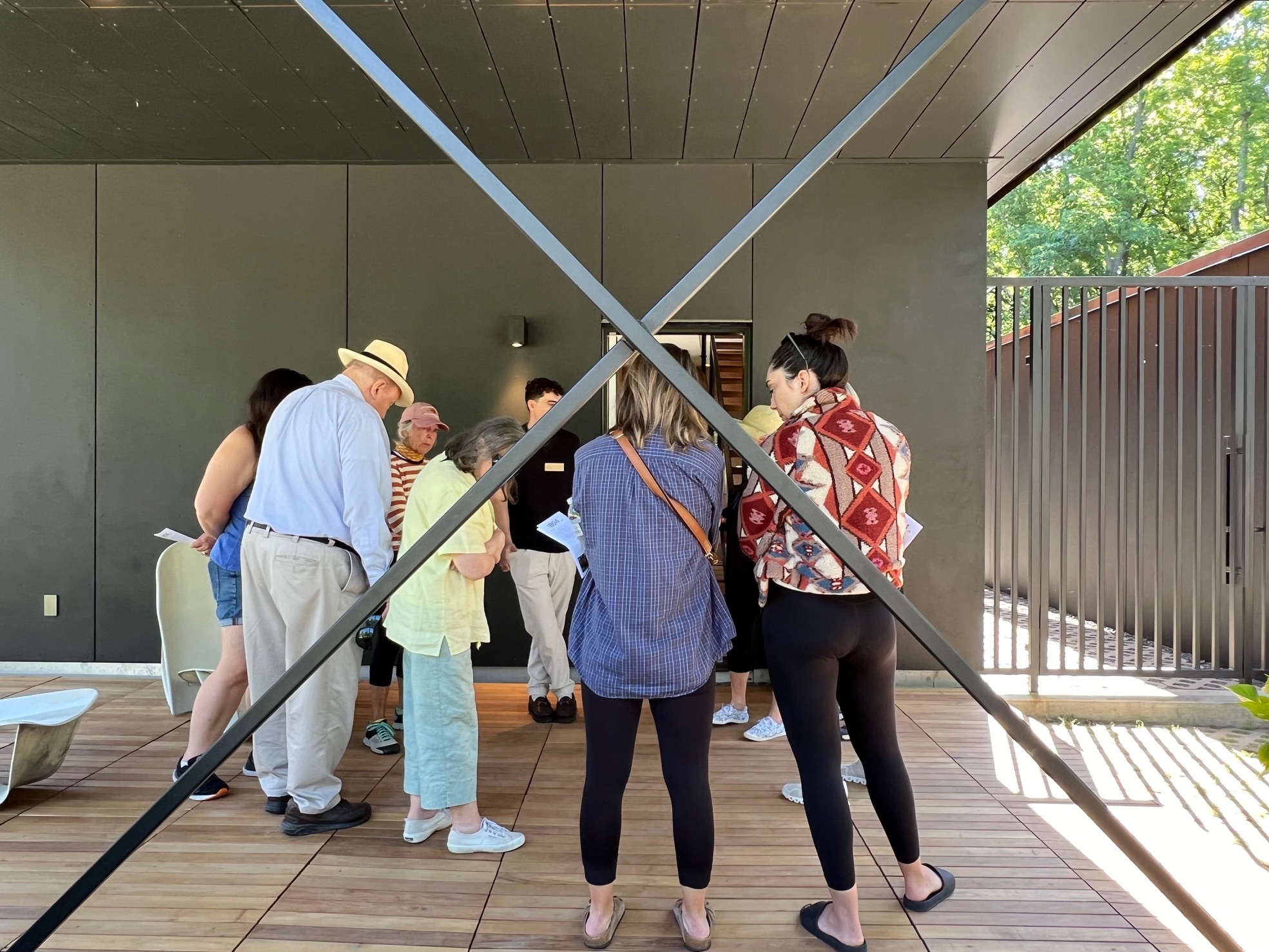
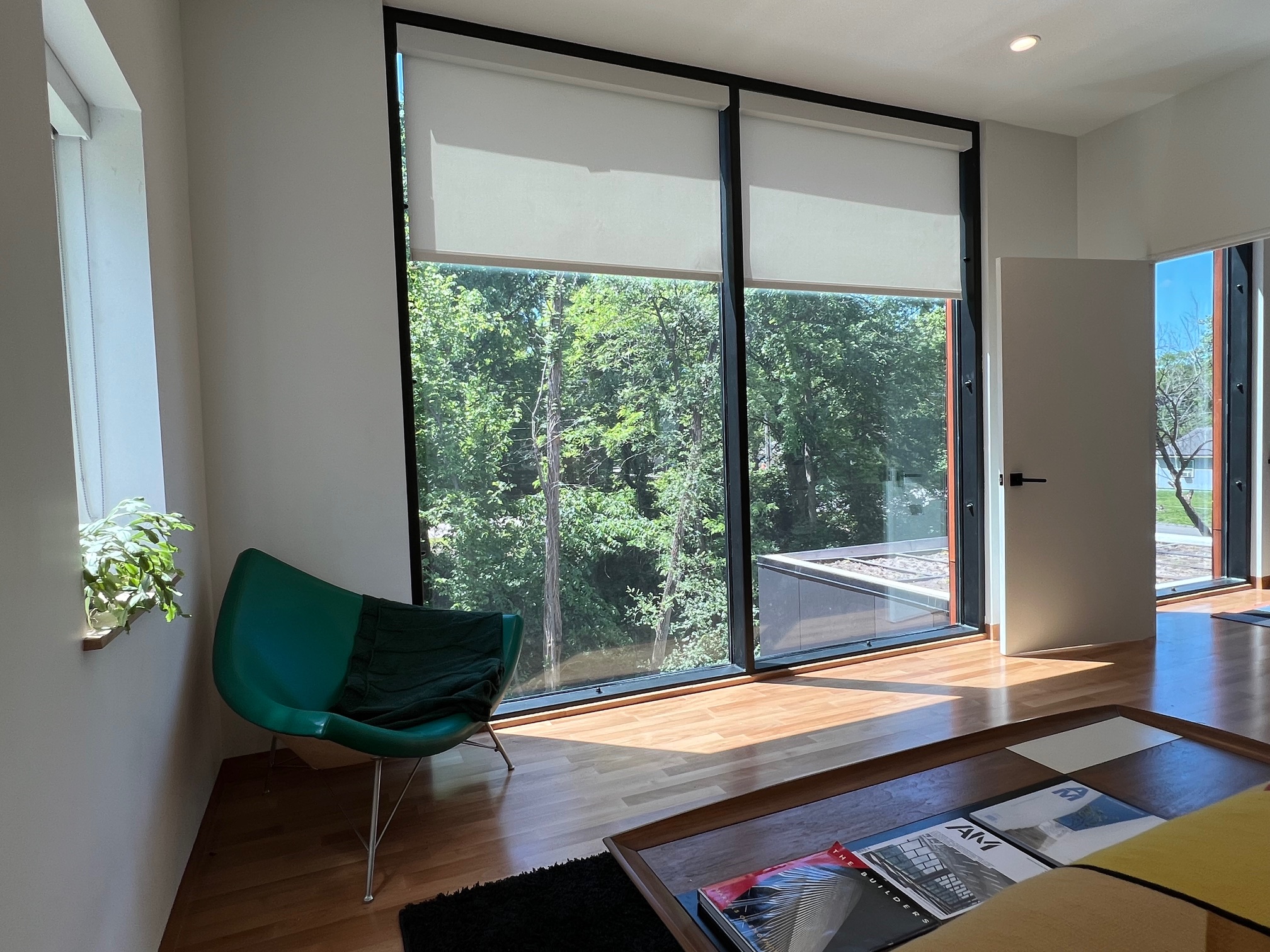
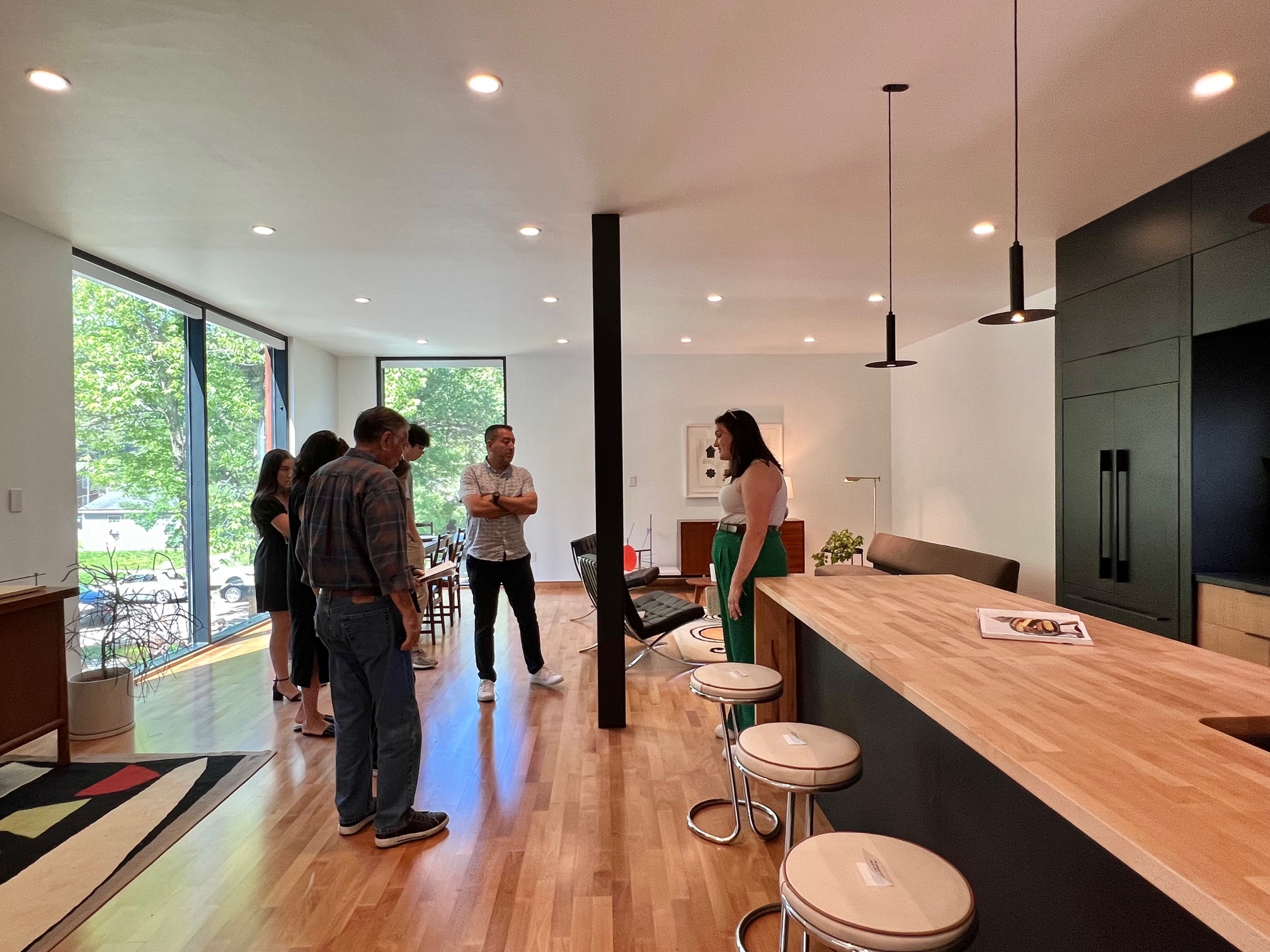
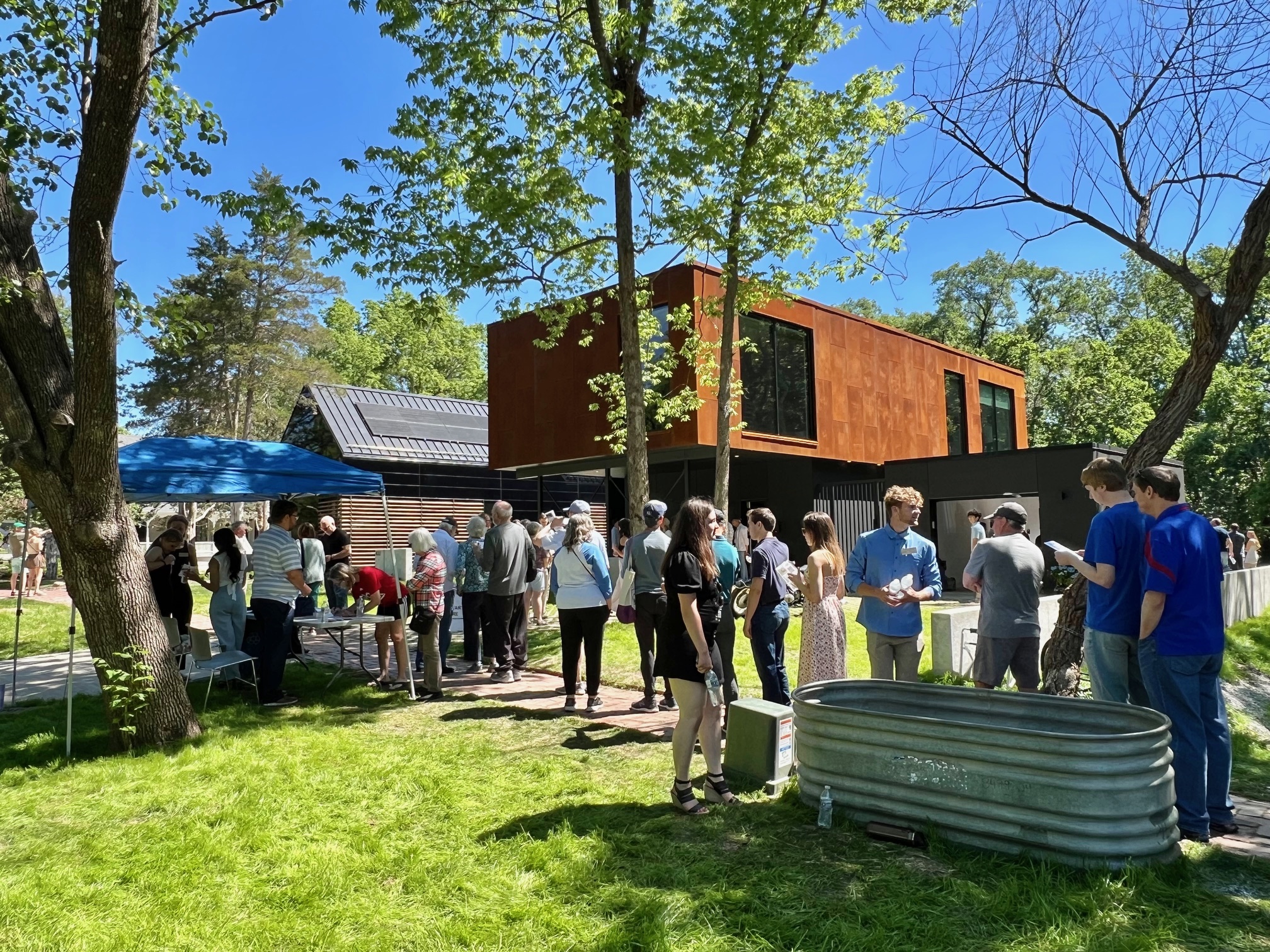
My first instinct when I approached Studio 804’s latest finished product, located at 436 Indiana St., was to photograph it from every conceivable angle. The house looked radiant as it shimmered in the early morning sunlight, and I felt an irresistible, perhaps mindless, urge to capture the fleeting moment before it was gone. On this well-attended open house last weekend, many others did the same: Instagram is once again alight with knockout images of another beautiful rectangular box inside and out, this one even more visually appealing than 2022’s 519 Indiana Street house, which at the time felt like a high point in the design/build program.
My assessment was premature, though. It was merely a plateau, not a pinnacle. As each successive 804 class raises the bar, students find creative ways of topping their predecessors, even as they have come to recycle many of their forms. Last year’s confection was a stunning amuse-bouche for architecture fans and a first-class upgrade of 2015’s New York House. (Though I first dismissed it as too decadent for the neighborhood, I’ve since come to admire it.) This year’s house improves 519 Indiana’s layout and features Corten steel exterior siding, which was inspired by Studio 804’s previous Random Road House project. The rich, textured metal jacket contrasts perfectly with the shiny Studio 804 house next door and feels more rooted in the local vernacular.
The architectural change of clothes has been highly successful lately in attracting buyers for 804’s projects. This year’s house sold for $663,500 months before it was completed. Studio 804 is a non-profit, and proceeds from the sale are reinvested in the following project. This results in buildings that continue to improve each year as students add new variations on their brand of increasingly sophisticated rectangular (or otherwise boxy) shapes and minimalist, hermetically sealed interior spaces that have won many design and energy efficiency awards.
Some perspective is in order. Most Studio 804 students have never designed or built anything before being put to this highly complicated task. They face constraints that most practicing architects never have to deal with and are often limited by what’s donated or left over from previous projects. The project timeline is insanely compressed. As Studio 804’s founder and senior leader, Prof. Dan Rockhill, told me, “You can’t have 28 people with really no full-on experience in nine months build a house where every single thing in there is custom.” And yet, by some miracle, they manage to pull it off every year.
So, what’s next?
My hope is that next year, students will embrace universal design principles along with a focus on beauty and technical performance. Practically, that means designing an interior accessible to people of all ages. While elevating the main living spaces imparts an otherworldly feeling, with privileged views and privacy, it also makes it difficult for old people who must climb a long flight of stairs to get to the kitchen. And what about animals? Unreachable cabinets too high for short old people is another problem. So are bathrooms that you can’t turn around in a wheelchair and narrow door openings that restrict them. More and more people are living in their 90s, and they don’t want to live in nursing homes.
Moreover, most can’t afford $7,000 a month. Is it possible to be beautiful and affordable, or is beauty only for the rich? How do you design and build a house for $350,000, the average cost of a house in Lawrence? Can a house still be sexy at that price, or is that simply out of the question?
These problems can be fixed, but it will require a shift in focus that encompasses a broader social vision. Are students up to this task?
Over the past 15 years that I’ve interacted off-and-on with Studio 804 students, I’ve noticed a recurring fetishization of technology when discussing their work, as if it were an end in itself. Not that there is inherently anything wrong with that—technology is a pillar of modern architecture—and it’s not the case with every student, but it’s enough that I’ve begun to wonder if they have a vocabulary for talking about what it is they’re doing when it comes to spatial needs.
Many students have an excellent vocabulary for discussing the shape of space and certain technical and structural effects, but I rarely hear them talking about function, humanity, or spirituality in architecture. Perhaps they are too afraid to use that vocabulary because it isn’t fully developed. But to the extent that language can be further developed and expressed in actual buildings, I believe we will see a tremendous breakthrough that will elevate Studio 804 to new heights.
To continue down the same path of repetitive forms and industrial chic is boring, and it only looks functional. Architects are in the business of solving human problems. While designing with humanity—or designing with nature, for that matter—probably will never win a design award, it shows purpose beyond self-indulgence.
Studio 804 students have already proven they can do the impossible. The next level of progress is a higher responsibility to solve the pressing housing problems of the future. In doing so, they can also create architecture that touches the soul and connects on an emotional level—something we can love, not just admire. When that happens, I’ll leave my camera in the bag, stand back, and smile.










 Lawrence Modern home