
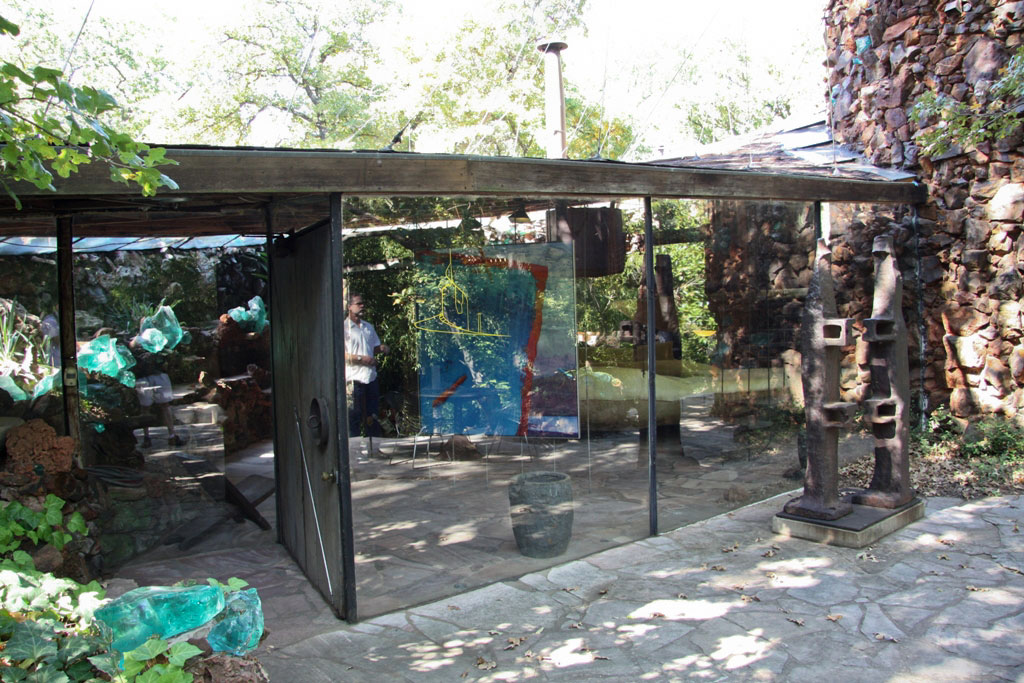
Tom Harper of Lawrence Modern and Scott Lane of KCmodern converse with a visitor in the “living room” of the Bavinger House in Norman, Oklahoma, October 2010.
Lawrence Modern is by nature a provincial enterprise but we do patrol the architecture news front. And we have some sad news to report. We recently learned that architect Bruce Goff’s Bavinger House, located in Norman, Oklahoma, was severely damaged in June and is feared to be lost. Although it is still unclear what exactly happened — storm damage or sabotage — it is evident from local news reports that the house’s spire and roof structure had collapsed. Those knowledgeable about the house and its deteriorating condition know what this means. It is a tragedy.
Tom Harper and I had the great fortune (in hindsight) of visiting the Bavinger House in October 2010 as part of an exhibition and symposium on Goff’s works at Oklahoma University. Scott Lane and Rod Parks of the KCmodern group joined us. We were planning to do a Full Monty post about our excursion, which included visits to many other Bruce Goff houses in the area, but the current plight of the Bavinger House supersedes that. In time, we will learn the true fate of the house, which may warrant a full-blown retrospective somewhere on these pages, but for now, we can only hope that the news isn’t as bad as we’ve heard and that the house somehow can be resurrected, dim as that prospect appears. It would be a miracle.
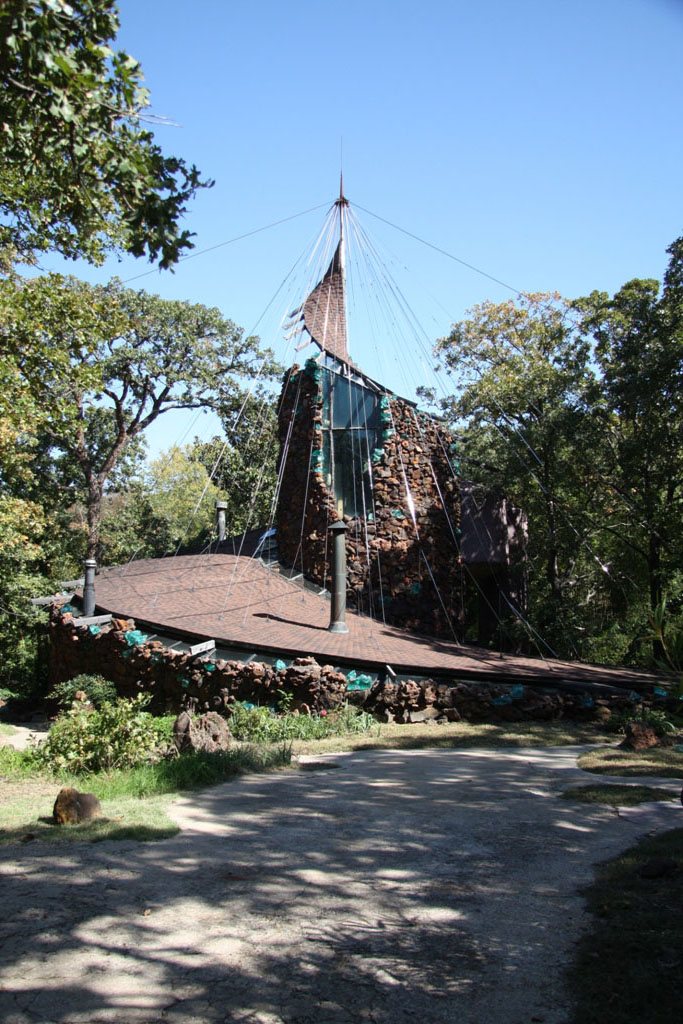
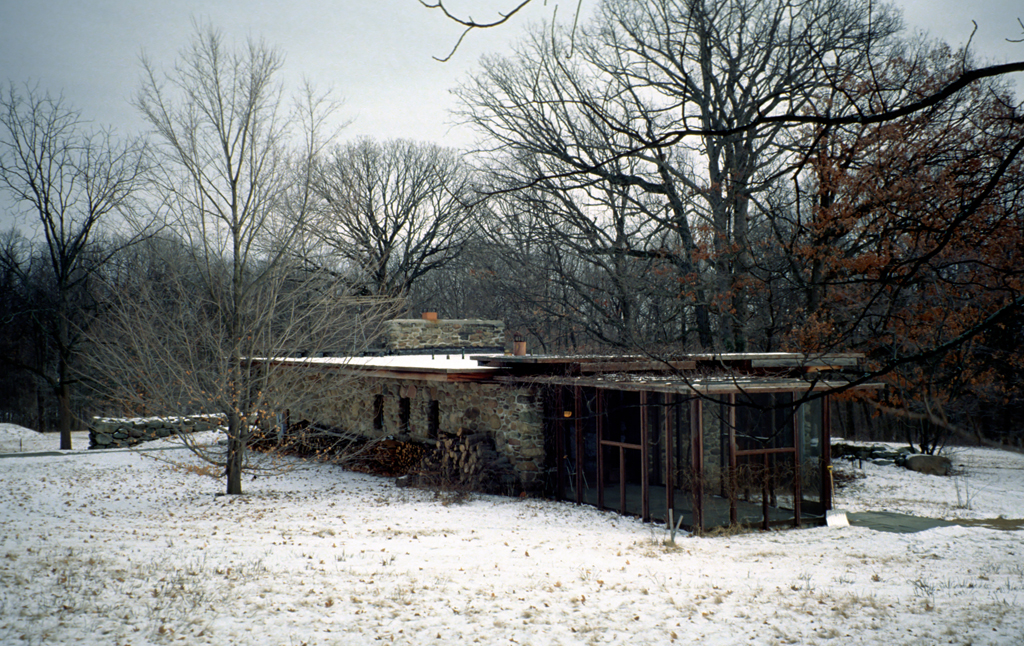
Driveway entrance
The Bavinger House is miraculous. A stone spiral heaved up out of the earth and twisting up into the sky, it is an incredibly transcendental vision of the natural world. Set in a rural, heavily wooded lot, the house was completed in 1955 and seems to exist outside of time as if thundered in by some alien force. Yet it is very much rooted in our culture. The house is a work of art built mostly out of found objects and junk — the mast is a used oil rig drilling pipe — and a reminder of the vitality of our surreal, American experience. It deserved ardent preservation, but sadly, it just didn’t work out that way.
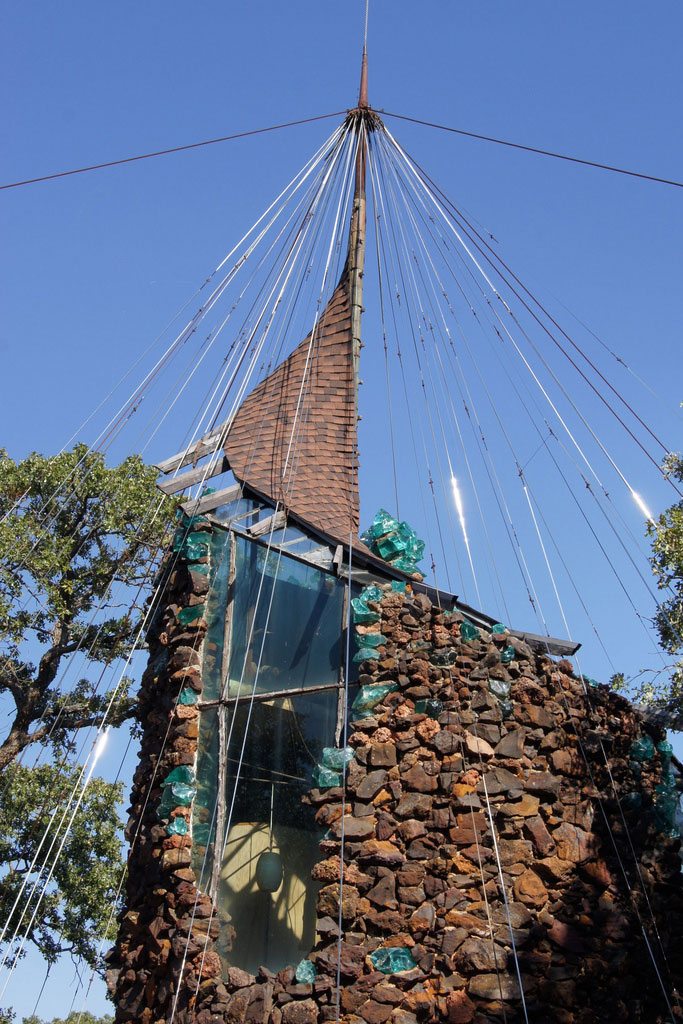
Close-up of spire
According to reports, the house was knocked down by storm damage, but there is also speculation that the owner, Bob Bavinger, intentionally destroyed it. So far no one really knows since Bavinger, son of the original owners, hasn’t let anyone on the property to inspect.
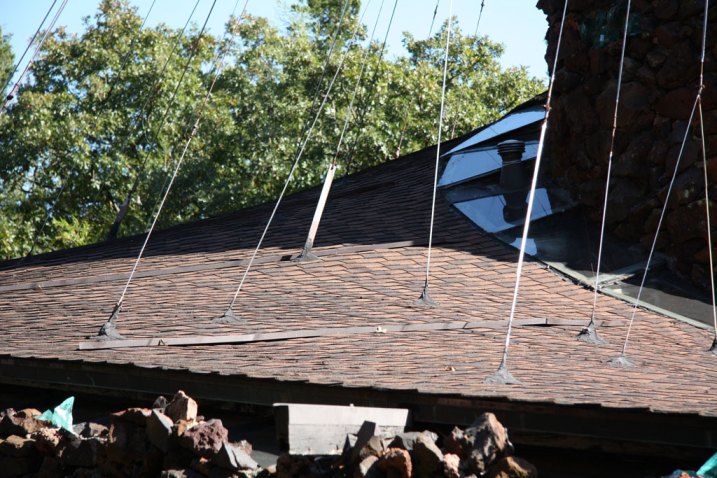
Logarithmic spiral roof suspended by airplane cables
Before it was toppled, the roof of the house was supported by cables projecting from the central steel mast, as seen in the photos above. (The original roof was made of wood shingles.) The rods, made of WWI-era airplane wire, also supported the interior floating pods, which functioned as the “rooms” of the house. The exterior wall of the house — and there is only one wall — is made of locally quarried ironstone. Discarded aqua-green glass cullets are embedded into the stone, and when the sun shines on them they glow like kyrptonite. Goff liked to use recycled objects because he believed that architecture should be organically tied to a particular place, but he also recycled to keep costs down. (The Bavinger House reportedly cost only $2,150 to build.) In this sense, the Bavinger House is one of the most elaborate yet cost-effective examples of folk art ever made.
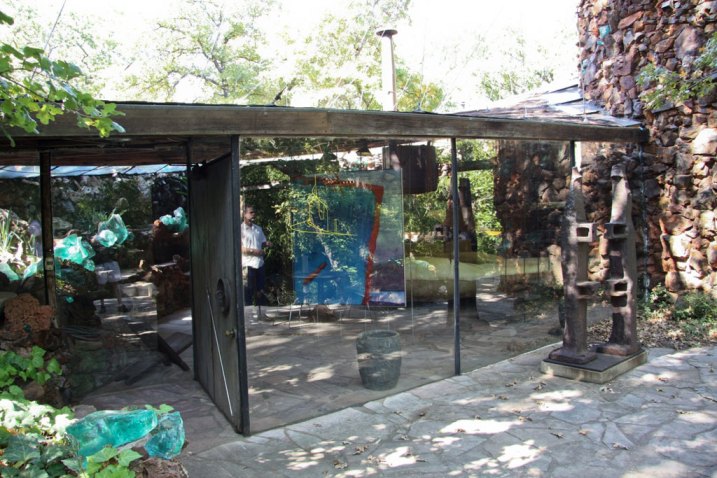
House entrance
Photography cannot possibly convey the essence of things, but as is often the case, it’s all that remains when things are gone. As Susan Sontag once said, eventually all photographs become precious relics of an irretrievable past.
Like Frank Lloyd Wright’s Fallingwater, so much has been written about the Bavinger House, Goff’s masterpiece, that it feels redundant to add much more. Suffice it to say that visiting the house had a profound effect on both of us. It pushed me to stop and think not only about architecture but also about the world around me. This is what great art does.
Any youth of today who wishes to expand his or her sense of what is possible in art and architecture should study Bruce Goff and, given the opportunity, visit his incredibly diverse creations. The Bavinger House may no longer be on the itinerary, but there are many other worthy houses to see. Seek them out and be prepared to enter a universe solely of the architect’s imagination, one unlike any other in the history of American architecture.
—Bill
Postscript: The November 15, 2012 issue of This Land reports that in an act of apparent self-destruction on the part of the owner, the Bavinger House was dismantled and its pieces are for sale.
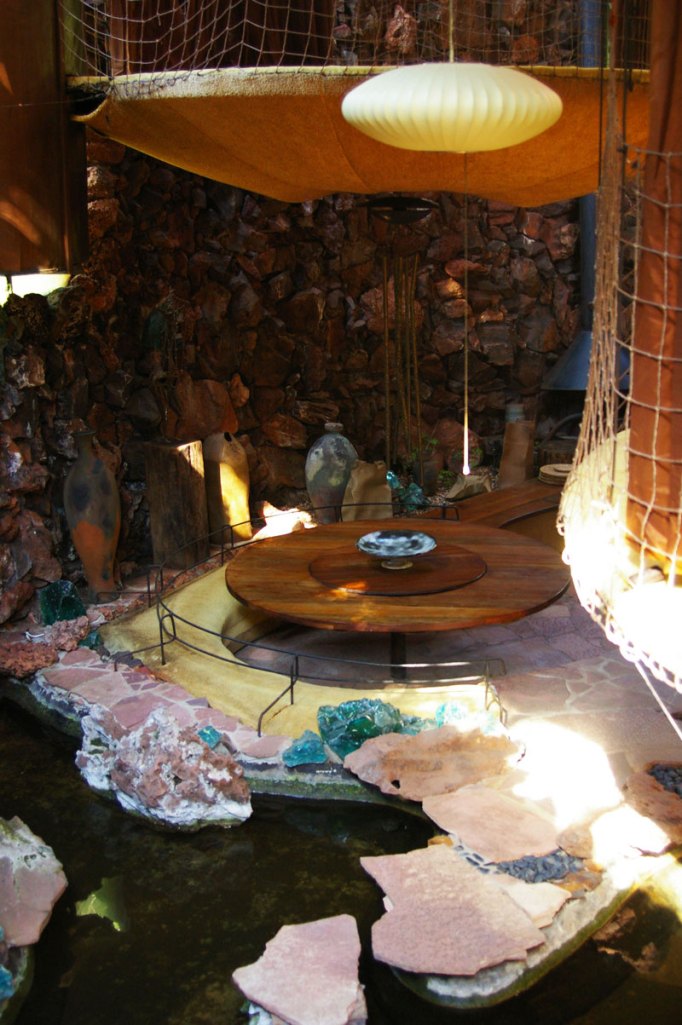
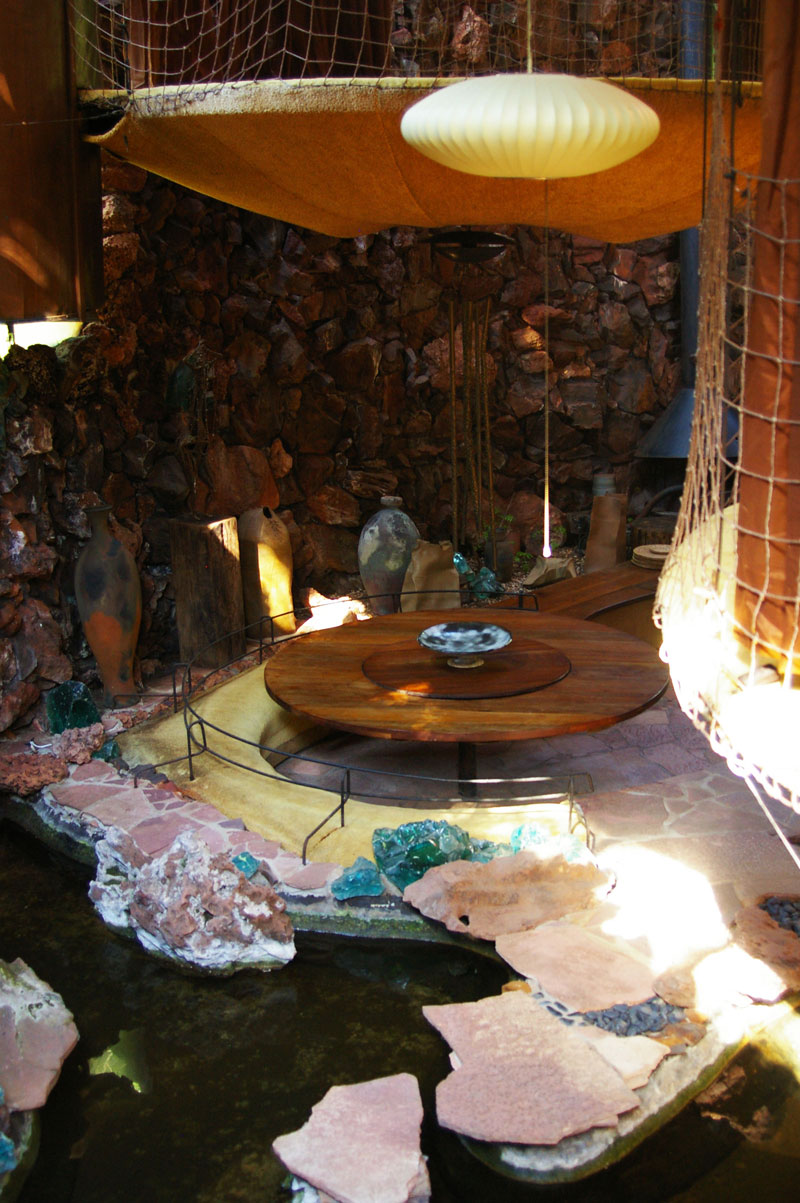
Dining room with koi pond in the foreground
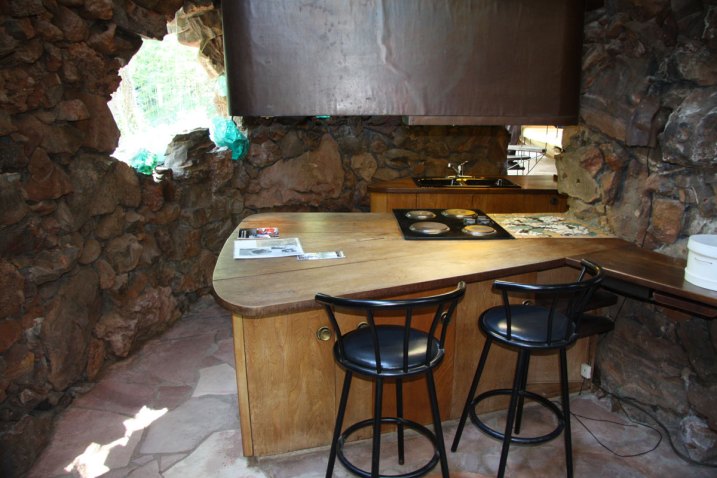
Kitchen
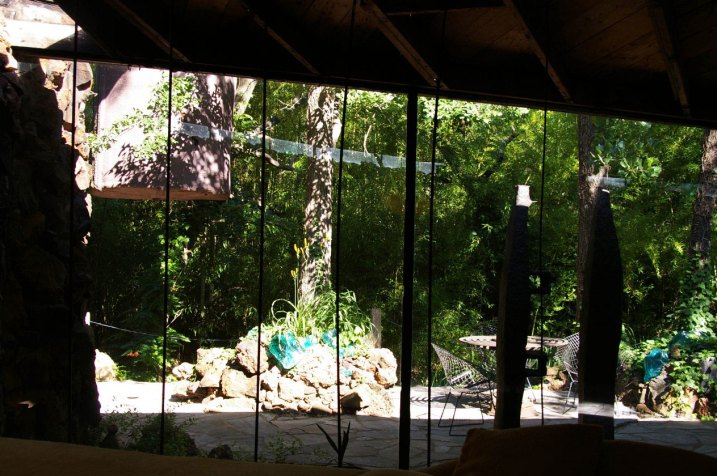
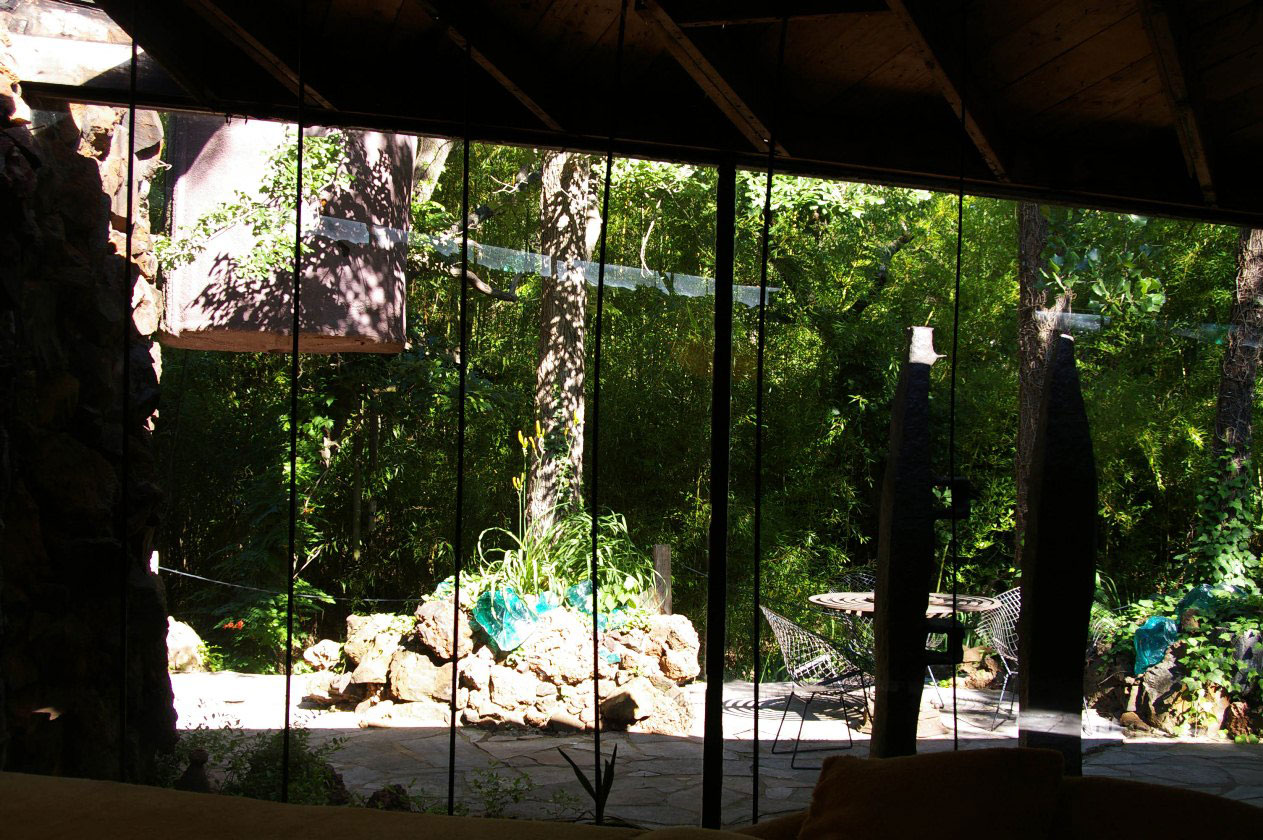
Looking out onto the front patio from the living room pod
[Click here to see more photos.]

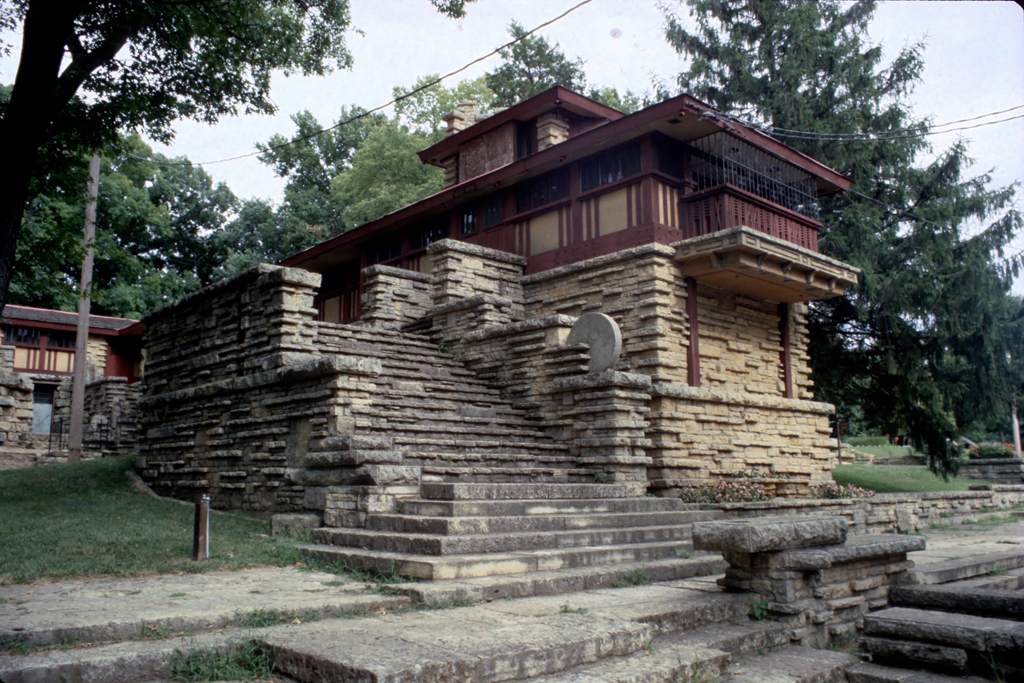




 Lawrence Modern home